Table of Contents
Introduction
An inguinal hernia is one of the most common types of hernias affecting both men and women, although it is more frequently seen in men. It occurs when a portion of the intestine or abdominal tissue pushes through a weak area in the lower abdominal wall, creating a visible bulge in the groin region.
While some people may initially ignore the condition, untreated hernias can become larger and may lead to serious complications. Fortunately, modern surgical techniques have made inguinal hernia repair safer, more effective, and associated with faster recovery than ever before.
What Is an Inguinal Hernia?
An inguinal hernia develops when tissue, usually part of the intestine or abdominal fat, protrudes through a weak spot in the abdominal muscles.
The condition commonly appears as:
- A bulge in the groin area
- Swelling that becomes more noticeable when standing
- Discomfort during physical activity
Inguinal hernias can occur on either side of the groin and often worsen over time if left untreated.
Causes of Inguinal Hernia
Common causes include:
- Weakness in the abdominal wall
- Heavy lifting without proper support
- Chronic coughing
- Obesity
- Straining during bowel movements
- Frequent constipation
- Pregnancy
- Previous abdominal surgery
- Aging-related muscle weakness
- Family history of hernia
Some individuals are born with naturally weak abdominal tissues, increasing their risk.
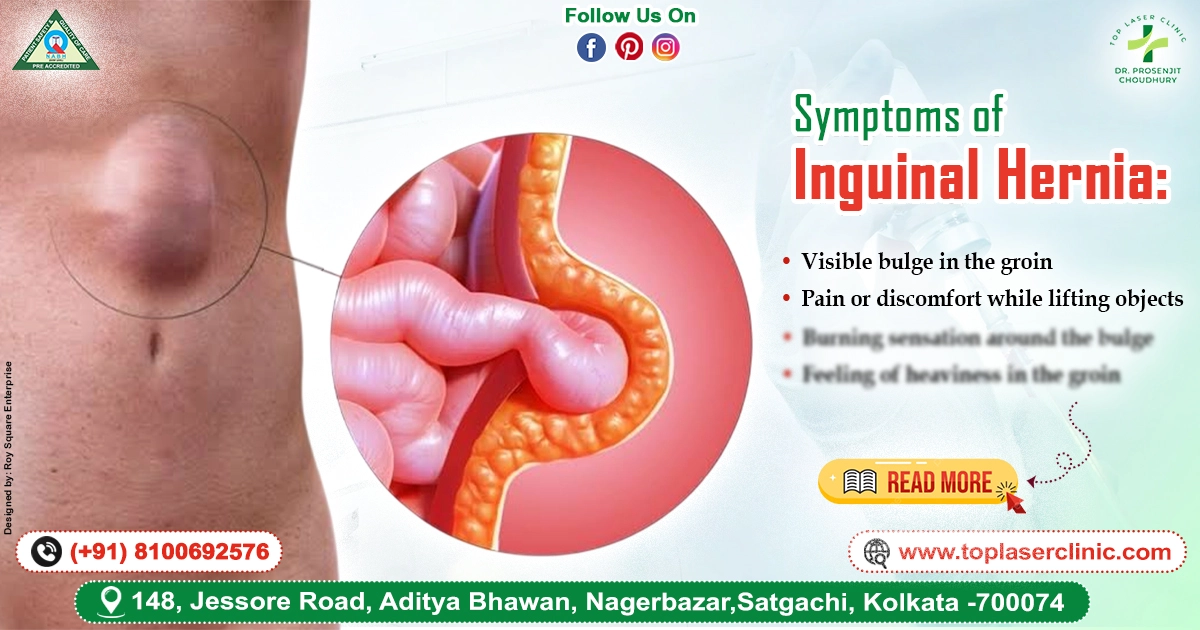
Symptoms of Inguinal Hernia
Symptoms may vary from mild discomfort to significant pain.
Common symptoms include:
- Visible bulge in the groin
- Pain or discomfort while lifting objects
- Burning sensation around the bulge
- Feeling of heaviness in the groin
- Weakness or pressure in the lower abdomen
- Swelling around the testicles in men
- Pain during coughing or bending
Seek immediate medical attention if the bulge becomes hard, painful, or cannot be pushed back inside.
When Is Hernia Repair Needed?
Not every hernia causes severe symptoms initially, but surgery is usually recommended because hernias do not heal on their own.
Hernia repair may be needed when:
- Pain affects daily activities
- The hernia is increasing in size
- There is risk of strangulation
- Bowel obstruction develops
- Physical movement becomes difficult
Early treatment often results in a smoother recovery and lower risk of complications.
Types of Inguinal Hernia Repair
Open Hernia Repair
Open hernia repair is a traditional and highly effective procedure.
During surgery:
- A single incision is made in the groin
- The protruding tissue is repositioned
- The weakened area is strengthened using surgical mesh
- The incision is closed carefully
Benefits:
- Proven long-term results
- Suitable for large hernias
- Effective for many patients
Laparoscopic Hernia Repair
Laparoscopic surgery is a minimally invasive approach.
The procedure involves:
- Small incisions
- A tiny camera for visualization
- Specialized surgical instruments
- Mesh placement to reinforce the abdominal wall
Benefits:
- Smaller scars
- Less pain
- Reduced blood loss
- Faster recovery
- Quicker return to work
Many patients prefer laparoscopic repair because of its excellent recovery profile.
How the Procedure Is Performed
The surgical process generally includes:
Step 1: Preoperative Evaluation
The surgeon reviews:
- Medical history
- Physical examination findings
- Diagnostic reports
Step 2: Anesthesia
General or regional anesthesia is administered for patient comfort.
Step 3: Hernia Repair
The hernia is carefully returned to its proper position.
Step 4: Mesh Reinforcement
A surgical mesh is placed to strengthen the weakened abdominal wall.
Possible Risks and Complications
Although hernia repair is generally safe, all surgeries carry some risks.
Possible complications include:
- Infection
- Bleeding
- Temporary swelling
- Fluid accumulation
- Recurrence of hernia
- Chronic pain (rare)
- Reaction to anesthesia
Choosing an experienced surgeon significantly reduces these risks.
Recovery After Inguinal Hernia Repair
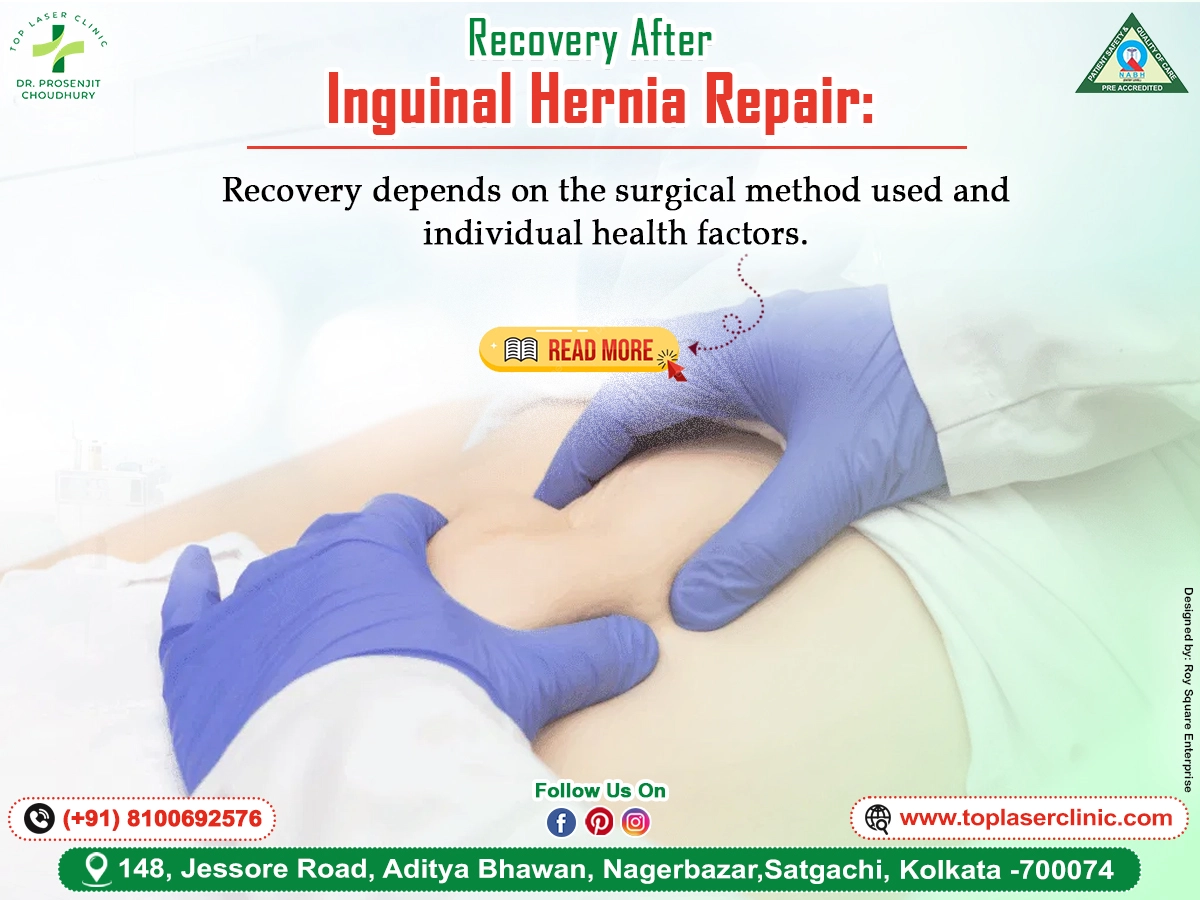
Recovery depends on the surgical method used and individual health factors.
Recovery Tips
- Walk regularly after surgery
- Drink plenty of fluids
- Follow prescribed medications
- Avoid heavy lifting
- Eat a fiber-rich diet
- Attend follow-up appointments
Recovery Timeline
- Light activities: 1–2 weeks
- Office work: 1–2 weeks
- Moderate exercise: 3–4 weeks
- Full recovery: 4–6 weeks
Many laparoscopic patients recover even faster.
Why Choose Dr. Prosenjit Choudhury at Top Laser Clinic?
When considering inguinal hernia surgery, selecting the right surgeon is one of the most important decisions.
Dr. Prosenjit Choudhury, an experienced General & Laparoscopic Surgeon in Kolkata, is known for delivering advanced surgical care using modern techniques.
Why patients trust Dr. Prosenjit Choudhury:
- Extensive surgical experience
- Expertise in laparoscopic procedures
- Patient-focused treatment approach
- Advanced surgical technology
- Faster recovery protocols
- Personalized treatment planning
At Top Laser Clinic, patients receive comprehensive care from consultation to recovery under the guidance of Dr. Prosenjit Choudhury.
As one of the best general surgeons in Kolkata, Dr. Prosenjit Choudhury focuses on safe, effective, and minimally invasive treatment options whenever possible.
Conclusion
Inguinal hernia is a common condition that should never be ignored. Early diagnosis and timely surgical repair can prevent serious complications and improve quality of life.
Modern surgical options, including open and laparoscopic hernia repair, offer excellent outcomes with minimal discomfort and quicker recovery. Consulting an experienced specialist ensures the best possible treatment and long-term success.
If you are experiencing symptoms of an inguinal hernia, seeking expert evaluation can help you return to a healthy, active lifestyle sooner.
1. Can an inguinal hernia heal without surgery?
No. Hernias do not heal naturally and usually require surgical repair.
2. Is inguinal hernia surgery painful?
Modern anesthesia and pain management make the procedure comfortable.
3. How long does surgery take?
Most procedures take between 30 and 90 minutes.
4. Is laparoscopic surgery better than open surgery?
Both are effective. The best option depends on individual cases.
5. When can I return to work?
Many patients return within one to two weeks.
6. Can a hernia come back after surgery?
Recurrence is uncommon but possible.
7. What should I avoid after surgery?
Avoid heavy lifting and strenuous activities during recovery.
8. Is mesh safe for hernia repair?
Yes. Surgical mesh is widely used and considered safe.
9. What happens if a hernia is left untreated?
It may enlarge and lead to complications such as strangulation.
10. Who should I consult for hernia treatment in Kolkata?
Consult an experienced specialist such as Dr. Prosenjit Choudhury at Top Laser Clinic for proper evaluation and treatment.

