Table of Contents
What Is a Chronic Leg Ulcer?
A chronic leg ulcer is an open wound on the leg that does not heal normally or remains present for several weeks. Unlike a small cut that gradually closes, a chronic ulcer may continue to cause pain, swelling, discharge, or skin changes.
These ulcers are often linked to problems with blood circulation, diabetes, varicose veins, or other underlying conditions. Simply covering the wound may not be enough. Identifying and treating the reason behind the ulcer is an important part of proper care.
Early medical evaluation can help prevent the wound from becoming deeper, infected, or more difficult to treat.
What Causes Chronic Leg Ulcers?
Several conditions can interfere with normal wound healing and lead to a chronic leg ulcer.
1. Poor Venous Circulation
When the veins have difficulty returning blood to the heart, pressure can build up in the lower legs. This can damage the skin and contribute to venous ulcers.
2. Varicose Veins
Enlarged and poorly functioning veins may affect circulation and increase the risk of developing a chronic wound.
3. Diabetes
High blood sugar can affect nerves and blood vessels, making injuries harder to notice and wounds slower to heal.
4. Poor Arterial Blood Flow
Narrowed or blocked arteries may reduce oxygen-rich blood reaching the tissues, delaying healing.
5. Infection
An infected wound can become increasingly painful and swollen and may take longer to heal.
6. Injury or Trauma
Even a minor injury can develop into a long-lasting ulcer when circulation or healing is already compromised.
7. Other Medical Conditions
Certain inflammatory, vascular, or systemic conditions can also contribute to chronic wounds.
What Are the Common Symptoms of a Chronic Leg Ulcer?
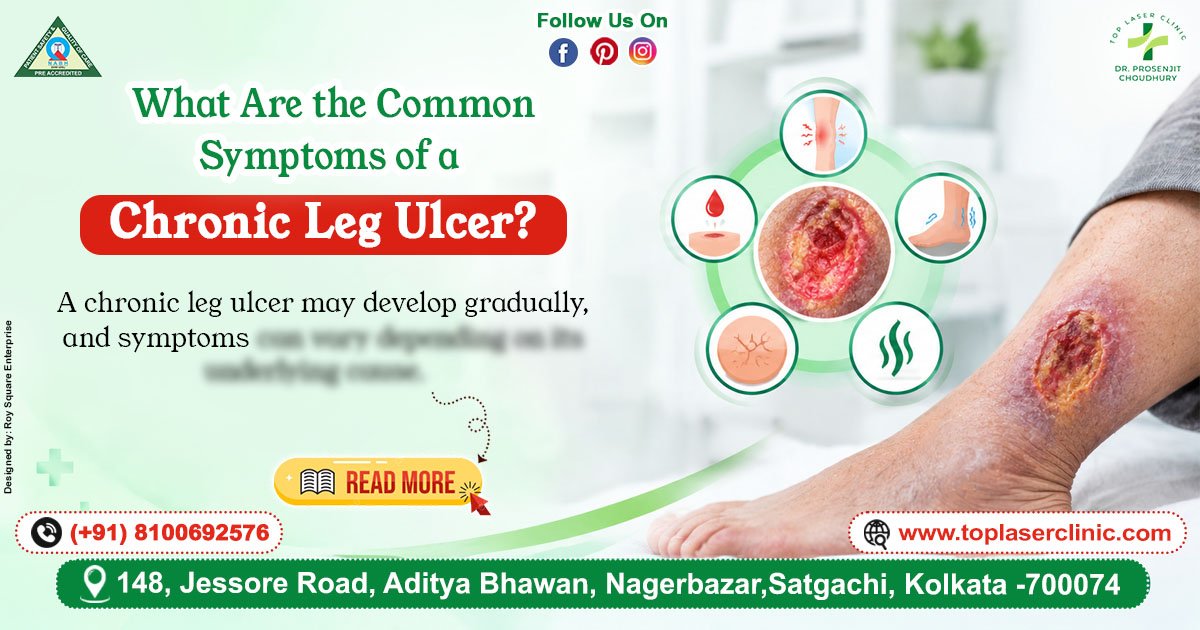
A chronic leg ulcer may develop gradually, and symptoms can vary depending on its underlying cause.
Common signs include:
- An open sore that does not heal
- Pain or tenderness around the wound
- Swelling of the leg or ankle
- Redness or warmth around the ulcer
- Skin discoloration
- Fluid or discharge from the wound
- Unpleasant odour, particularly if infection develops
- Thickened or hardened skin around the affected area
- Repeated breakdown of the same wound
A wound that continues to remain open should not be ignored, even if the pain is mild.
What Are the Different Types of Leg Ulcers?
Leg ulcers are generally classified according to their underlying cause.
Venous Ulcers
These are associated with poor venous circulation and commonly develop around the lower leg or ankle.
Arterial Ulcers
These occur when reduced arterial blood flow prevents enough oxygen and nutrients from reaching the tissues.
Diabetic Ulcers
These can occur in people with diabetes, particularly when nerve damage and circulation problems are present.
Pressure-Related Ulcers
Prolonged pressure on a particular area can damage the skin and underlying tissues, especially in people with limited mobility.
Knowing the type of ulcer is important because treatment differs according to its cause.
How Is a Chronic Leg Ulcer Diagnosed?
A doctor will first examine the ulcer and ask about its duration, symptoms, medical history, medications, diabetes status, circulation problems, and previous wounds.
Depending on the suspected cause, additional tests may include:
- Ankle-Brachial Index (ABI): Helps assess blood flow in the legs.
- Doppler ultrasound: Examines blood flow through veins and arteries.
- Blood tests: May be recommended when infection or another underlying condition is suspected.
- Wound assessment: Examines the size, depth, appearance, and surrounding skin.
- Further vascular investigations: May be required in selected cases.
Diagnosis
The goal of diagnosis is not only to examine the wound but also to determine why it is not healing. Treating the underlying circulation problem, infection, diabetes, or other contributing factor can be essential for successful healing.
What Are the Treatment Options for Chronic Leg Ulcers?
Treatment depends on the type, size, depth, location, and cause of the ulcer.
- 1. Wound Cleaning and Dressing
Regular cleaning and appropriate dressings can protect the wound and support a healthy healing environment.
2. Compression Therapy
Compression may be recommended for certain venous ulcers to improve venous circulation and reduce swelling. It should be used only after appropriate assessment, particularly when arterial disease is possible.
3. Treating Infection
If an ulcer becomes infected, medical treatment may be necessary. Antibiotics are generally used when a bacterial infection is diagnosed or strongly suspected rather than simply because an ulcer is present.
4. Debridement
Dead or unhealthy tissue may sometimes need to be removed to help the wound heal properly.
5. Managing Diabetes
Good blood sugar management is particularly important for people with diabetes-related wounds.
6. Improving Blood Circulation
If an underlying vein or artery problem is responsible, specific vascular treatment may be considered.
7. Surgical or Minimally Invasive Treatment
Some chronic ulcers may require a procedure to address the underlying vascular problem or another structural cause.
A personalised treatment plan is generally more effective than treating the wound alone.
How Can You Speed Up Leg Ulcer Healing?
Healing can take time, but several healthy habits may support recovery:
- Follow the wound-care plan carefully.
- Keep diabetes under proper control if applicable.
- Take prescribed medicines as directed.
- Follow compression therapy instructions when recommended.
- Avoid smoking.
- Eat a balanced diet with adequate protein and nutrients.
- Protect the affected leg from further injury.
- Keep follow-up appointments.
- Do not apply unprescribed creams or home remedies to an open ulcer.
Most importantly, do not wait for a chronic wound to become painful before seeking medical advice.
Complications if Untreated
Ignoring a chronic leg ulcer can allow the condition to worsen.
Possible complications include:
- Wound infection
- Increasing pain and swelling
- Deeper tissue damage
- Cellulitis
- Delayed or failed healing
- Recurrent ulcers
- Tissue death in severe cases
- Rarely, serious systemic infection
The risk of complications depends on the cause and severity of the ulcer, as well as the person’s overall health.
Benefits of Early Treatment
Getting medical attention early can offer several important advantages:
- Identifies the underlying cause
- Helps prevent infection
- Supports faster and healthier wound healing
- Reduces the risk of recurrence
- Helps manage circulation problems
- Reduces the chance of serious complications
- Provides a personalised treatment approach
Early care is particularly important when an ulcer is associated with diabetes or poor blood circulation.

When Should You See a Doctor for a Chronic Leg Ulcer?
You should seek medical evaluation if a wound on your leg is not healing normally or keeps reopening.
Seek prompt medical attention if you notice:
- Increasing redness or warmth
- Pus or foul-smelling discharge
- Sudden increase in pain
- Significant swelling
- Fever or chills
- Black or dead-looking tissue
- Rapidly worsening wound
- Changes in skin colour or temperature
- A wound that is not improving despite proper care
Why Choose Dr. Prosenjit Choudhury at Top Laser Clinic?
For patients looking for experienced surgical care for chronic wounds and related conditions, Dr. Prosenjit Choudhury at Top Laser Clinic brings experience in General and Laparoscopic Surgery.
He is an experienced General & Laparoscopic Surgeon in Kolkata, with a focus on evaluating surgical conditions and providing appropriate treatment based on each patient’s needs.
At Top Laser Clinic, patients can receive professional evaluation and guidance for conditions that may require surgical or minimally invasive management. The right treatment is selected after understanding the patient’s condition, medical history, and underlying cause.
For those searching for the Best General Surgeon in Kolkata, a proper consultation can help determine whether a chronic leg ulcer requires wound care alone, treatment of an underlying condition, or further surgical assessment.
Many ulcers can heal with appropriate treatment, although some may require prolonged care and treatment of the underlying cause.
When to See a Doctor
A chronic leg ulcer is more than just a skin wound—it can be a sign of an underlying circulation, metabolic, or vascular problem. If a wound is not healing as expected, professional assessment can help identify the cause and guide appropriate treatment.
Do not wait until the wound becomes severely infected or painful. Early diagnosis and timely treatment can make wound management easier and may reduce the risk of complications.
Conclusion
A chronic leg ulcer requires more than regular dressing. Understanding its underlying cause is the key to choosing appropriate treatment and supporting proper healing. Venous problems, diabetes, poor arterial circulation, infection, and other conditions can all affect the healing process.
With timely diagnosis, suitable wound care, management of the underlying condition, and regular medical follow-up, many chronic leg ulcers can be managed effectively. If you have a wound that is not healing, consult a qualified doctor rather than relying only on home remedies.
1. What is a chronic leg ulcer?
A chronic leg ulcer is an open wound on the leg that does not heal normally over an extended period.
2. What is the most common cause of a leg ulcer?
Poor venous circulation is a common cause, although diabetes and arterial disease can also contribute.
3. Can diabetes cause chronic leg ulcers?
Yes, diabetes can increase ulcer risk through nerve damage, poor circulation, and delayed wound healing.
4. Can varicose veins cause leg ulcers?
Yes, long-standing venous circulation problems associated with varicose veins can contribute to venous ulcers.
5. Are chronic leg ulcers dangerous?
They can become serious if infected or left untreated, particularly when circulation or diabetes is involved.
6. How long does a chronic leg ulcer take to heal?
Healing time varies depending on the ulcer’s cause, size, depth, circulation, and overall health.
7. Can a chronic leg ulcer heal completely?
Many ulcers can heal with appropriate treatment, although some may require prolonged care and treatment of the underlying cause.
8. Is compression therapy useful for leg ulcers?
Compression can help selected venous ulcers, but circulation should be assessed before compression is used.
9. Should I treat a chronic leg ulcer at home?
Basic wound protection may be possible at home, but a persistent ulcer should be professionally assessed to identify its cause.
10. When should I see a doctor for a leg ulcer?
See a doctor when a wound fails to heal, repeatedly opens, becomes painful, or shows signs of infection.

