An incisional hernia is one of the most common complications that can occur after abdominal surgery. It develops when tissue or part of the intestine pushes through a weakened area of the abdominal wall near a previous surgical incision. While some incisional hernias remain small and painless, others can gradually increase in size and lead to discomfort or serious complications if left untreated.
The good news is that modern surgical techniques make incisional hernia treatment highly effective. Early diagnosis and timely treatment help prevent complications and allow patients to return to their normal routine sooner.
Table of Contents
1. What Is an Incisional Hernia?
An incisional hernia develops at the site of a previous abdominal surgery. After surgery, the muscles and tissues of the abdominal wall usually heal together. However, in some cases, the surgical wound becomes weak, allowing internal tissues or organs to bulge through the opening.
This condition may appear within a few months after surgery or even several years later.
2. How Does an Incisional Hernia Develop?
The abdominal wall acts like a strong protective layer for the internal organs. During surgery, this wall is cut and later stitched back together.
If the incision does not heal properly or excessive pressure is placed on the healing wound, the muscles may separate. Over time, fat or part of the intestine can push through the weakened area, creating an incisional hernia.
3. Common Causes of Incisional Hernia
Several factors increase the risk of developing an incisional hernia.
Previous abdominal surgery
The most common cause is weakness at the site of a previous surgical incision.
Surgical wound infection
An infected wound heals slowly and weakens the abdominal muscles.
Obesity
Extra body weight increases pressure inside the abdomen.
Heavy lifting
Lifting heavy objects too soon after surgery can strain the healing tissues.
Chronic cough
Continuous coughing creates repeated pressure on the abdominal wall.
Constipation
Frequent straining during bowel movements may contribute to hernia formation.
Smoking
Smoking reduces blood supply and delays tissue healing.
Older age
Natural weakening of muscles makes hernias more likely.
4. Signs and Symptoms
The symptoms vary depending on the size of the hernia.
Common signs include:
- A noticeable bulge near a previous surgical scar
- Pain or discomfort while standing
- Swelling that becomes more visible during coughing
- Feeling of heaviness in the abdomen
- Pain during lifting or exercise
- Nausea in severe cases
Some small hernias may not cause any symptoms initially.
5. Types of Incisional Hernia
Small Incisional Hernia
Produces a minor bulge with little discomfort.
Large Incisional Hernia
Creates a significant swelling and may affect daily activities.
Strangulated Hernia
Blood supply to the trapped tissue is blocked. This is a medical emergency requiring immediate surgery.
6. How Is It Diagnosed?
Diagnosis usually begins with a detailed medical history and physical examination.
Your surgeon may also recommend:
- Ultrasound
- CT Scan
- MRI Scan
- Blood tests before surgery
Imaging tests help determine the size, location, and severity of the hernia.
7. Treatment Options
The treatment depends on the size of the hernia, symptoms, and the patient’s overall health.
Observation
Very small, painless hernias may only require regular monitoring.
Open Hernia Repair
A traditional surgery where the weakened muscles are repaired through a larger incision. Surgical mesh is often used for additional support.
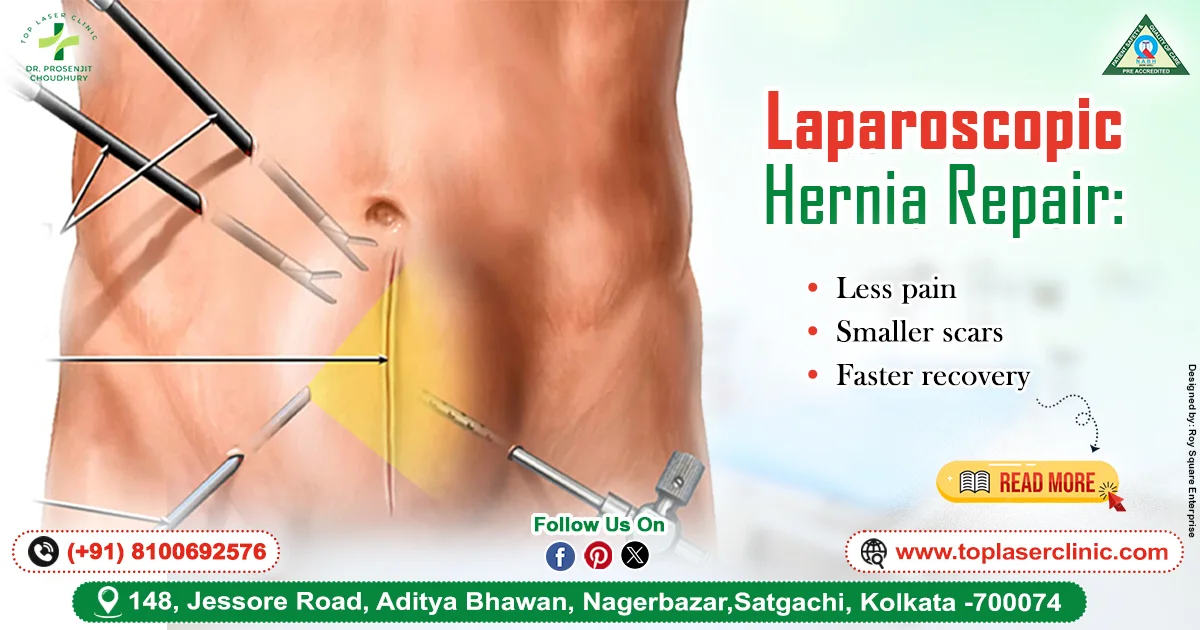
Laparoscopic Hernia Repair
- Less pain
- Smaller scars
- Faster recovery
- Shorter hospital stay
- Lower infection risk
Robotic Hernia Surgery
Suitable for selected patients and performed using advanced robotic technology.
Mesh Repair
Modern surgical mesh strengthens the abdominal wall and significantly reduces the chances of recurrence.
8. Possible Complications
If left untreated, an incisional hernia can become serious.
Possible complications include:
- Hernia enlargement
- Chronic abdominal pain
- Intestinal obstruction
- Incarcerated hernia
- Strangulated hernia
- Reduced blood supply to the intestine
- Emergency surgery
Seeking treatment early greatly reduces these risks.
When to See a Doctor
Consult a surgeon immediately if you notice:
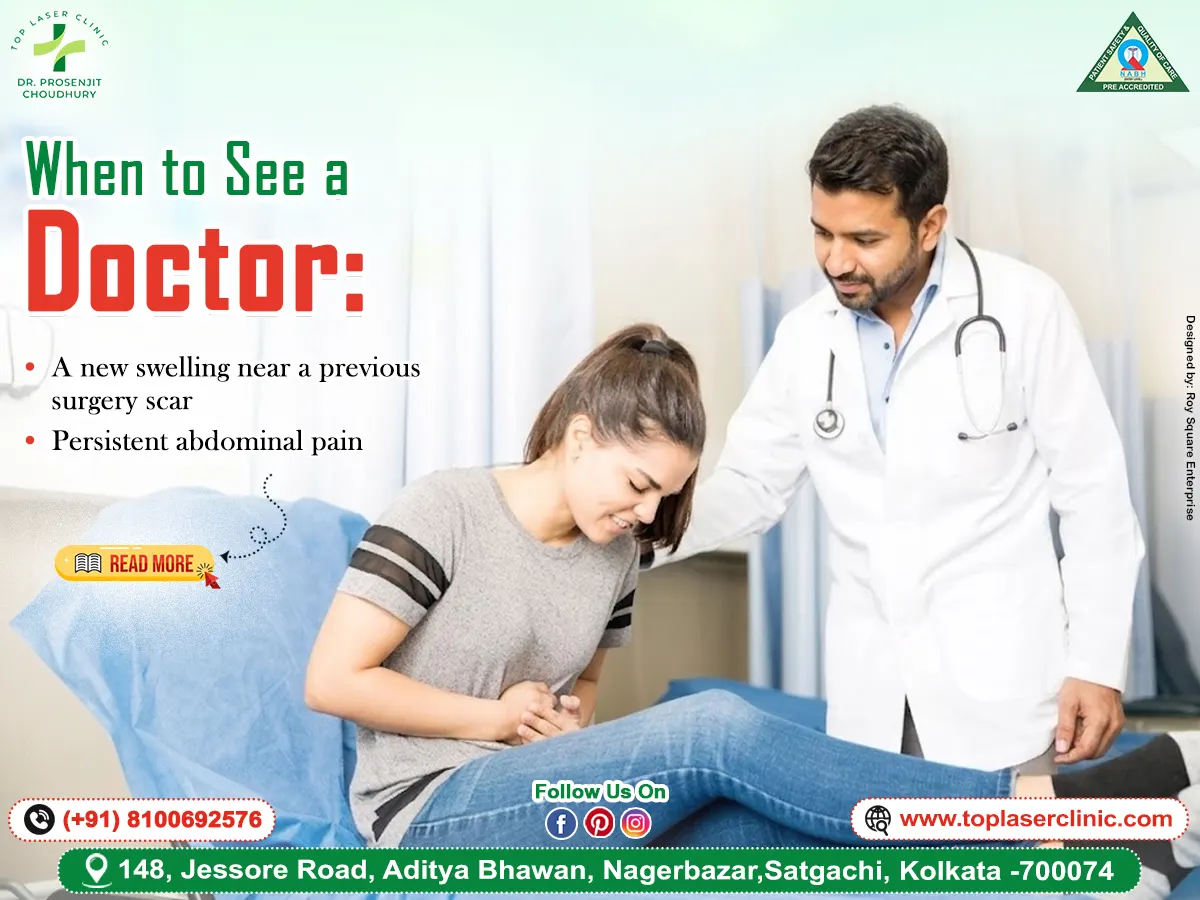
- A new swelling near a previous surgery scar
- Persistent abdominal pain
- Increasing size of the bulge
- Redness around the swelling
- Fever with severe pain
- Vomiting
- Inability to push the bulge back
- Sudden severe abdominal pain
Early medical attention leads to better outcomes and fewer complications.
Why Choose Dr. Prosenjit Choudhury, Top Laser Clinic?
Choosing the right surgeon is one of the most important decisions for successful hernia treatment.
Dr. Prosenjit Choudhury is an experienced General & Laparoscopic Surgeon at Top Laser Clinic, Kolkata, with extensive expertise in diagnosing and treating various types of hernias using advanced surgical techniques.
Patients trust Dr. Prosenjit Choudhury for his patient-focused approach, accurate diagnosis, and commitment to providing safe and effective treatment. Whether you require laparoscopic or open hernia repair, he carefully evaluates every case.
Conclusion
An incisional hernia is a treatable condition, especially when diagnosed early. Ignoring symptoms may lead to complications that require emergency surgery. If you notice a swelling near a previous surgical scar, do not delay seeking medical advice.
Modern procedures such as laparoscopic hernia repair offer excellent outcomes, reduced pain, and quicker recovery. With timely diagnosis, proper treatment, and expert surgical care, most patients return to their normal activities within a short period.
1. What causes an incisional hernia?
It usually develops due to weakness in the abdominal wall after previous surgery.
2. Can an incisional hernia heal without surgery?
No. Hernias do not heal on their own. Surgery is the only permanent treatment.
3. Is an incisional hernia dangerous?
It can become dangerous if it becomes trapped or strangulated.
4. How is an incisional hernia diagnosed?
Through physical examination and imaging tests such as ultrasound or CT scan.
5. Which surgery is better—laparoscopic or open?
Laparoscopic surgery usually offers faster recovery and less pain, but the best option depends on the patient’s condition.
6. Is mesh used in hernia surgery?
Yes. Surgical mesh is commonly used to strengthen the abdominal wall and reduce recurrence.
7. How long does recovery take?
Most patients recover within 2–6 weeks, depending on the type of surgery and overall health.
8. Can an incisional hernia return after surgery?
Although recurrence is uncommon with proper repair, it is still possible, especially if post-operative precautions are not followed.
9. Can exercise cause an incisional hernia?
Maintain a healthy weight, avoid smoking, manage chronic cough, prevent constipation, and follow your surgeon’s post-operative instructions carefully.
10. How can I prevent an incisional hernia?
Heavy lifting or strenuous exercise too soon after abdominal surgery may increase the risk.

