A swollen neck caused by a goiter can affect much more than appearance. As the thyroid gland enlarges, it may lead to difficulty swallowing, breathing problems, voice changes, and discomfort in daily life. While many goiters can be managed with medicines or observation, some require surgery for long-term relief and to prevent serious complications.
If you or someone you know has been diagnosed with a goiter, understanding when surgery becomes necessary can help you make an informed decision. This comprehensive guide explains everything you need to know about thyroid surgery for goiter in simple language.
Table of Contents
What Is a Goiter?
A goiter is an abnormal enlargement of the thyroid gland, a butterfly-shaped gland located at the front of your neck. The thyroid produces hormones that control metabolism, heart rate, body temperature, and energy levels.
A goiter may develop even when thyroid hormone levels are normal. Some remain small and painless, while others become large enough to interfere with swallowing, breathing, or speaking.
Types of Goiter
1. Diffuse Goiter
The entire thyroid gland enlarges evenly.
2. Nodular Goiter
One or more nodules develop within the thyroid.
3. Multinodular Goiter
Multiple thyroid nodules enlarge the gland.
4. Toxic Goiter
Produces excessive thyroid hormones, leading to hyperthyroidism.
5. Non-Toxic Goiter
The thyroid enlarges without affecting hormone production.
Causes of Goiter
Several conditions can cause thyroid enlargement, including:
- Iodine deficiency
- Autoimmune thyroid disorders
- Graves’ disease
- Hashimoto’s thyroiditis
- Thyroid nodules
- Thyroid cysts
- Benign thyroid tumors
- Thyroid cancer
- Hormonal changes during pregnancy
- Family history of thyroid disease
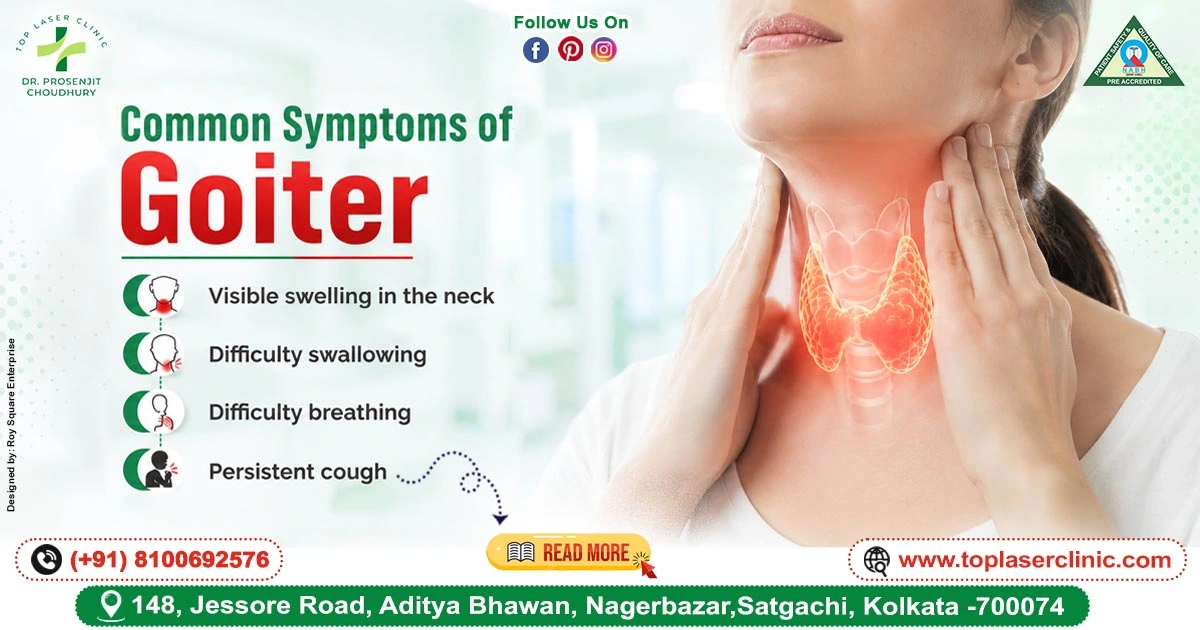
Common Symptoms of Goiter
Common signs include:
- Visible swelling in the neck
- Difficulty swallowing
- Difficulty breathing
- Persistent cough
- Hoarseness of voice
- Tightness in the neck
- Pain or discomfort in the neck
- Feeling of pressure while lying down
- Fatigue
- Weight changes if thyroid hormone levels are abnormal
Some people may have no symptoms until the goiter becomes large.
When Is Thyroid Surgery for Goiter Needed?
Surgery is not necessary for every goiter. However, it becomes the preferred treatment when:
- The goiter is growing rapidly.
- It causes difficulty swallowing or breathing.
- The swelling affects daily activities.
- Thyroid cancer is suspected.
- Biopsy results are abnormal.
- Medicines fail to control symptoms.
- There are large thyroid nodules.
- Cosmetic concerns significantly affect confidence.
- Hyperthyroidism cannot be controlled by medication.
An experienced surgeon will carefully evaluate your condition before recommending surgery.
9 Proven Benefits of Thyroid Surgery for Goiter
1. Immediate Relief from Pressure Symptoms
Large goiters often compress the windpipe and food pipe. Surgery relieves this pressure, making breathing and swallowing easier.
2. Improved Breathing
Patients with airway compression often notice significant improvement in breathing after surgery.
3. Easier Swallowing
Removing the enlarged thyroid allows food to pass comfortably through the esophagus.
4. Better Cosmetic Appearance
A large neck swelling can affect confidence. Surgery restores a more natural neck contour.
5. Eliminates Suspicious Thyroid Nodules
If cancer cannot be ruled out, surgery allows complete removal and laboratory examination of suspicious tissue.
6. Reduces Risk of Future Complications
Removing problematic thyroid tissue prevents further enlargement and associated complications.
7. Long-Term Solution
Unlike temporary treatments, surgery provides a permanent solution for many patients with large or symptomatic goiters.
8. Improves Quality of Life
Patients often experience better sleep, easier eating, greater confidence, and improved daily comfort after recovery.
9. Prevents Serious Health Problems
Early surgery can prevent airway obstruction, severe compression symptoms, and progression of underlying thyroid disease.
Risks and Possible Complications
Like any surgical procedure, thyroid surgery carries certain risks, although serious complications are uncommon when performed by an experienced surgeon.
Possible risks include:
- Bleeding
- Infection
- Temporary voice changes
- Injury to the recurrent laryngeal nerve
- Scar formation
- Reaction to anesthesia
Most patients recover smoothly with appropriate postoperative care.
Complications if Untreated
Ignoring a growing goiter may lead to:
- Progressive enlargement
- Difficulty breathing
- Difficulty swallowing
- Compression of nearby structures
- Hyperthyroidism
- Thyroid cancer remaining undiagnosed
- Permanent voice problems
- Reduced quality of life
- Emergency airway obstruction in severe cases
Early diagnosis and timely treatment help avoid these complications.
Can Goiter Return After Surgery?
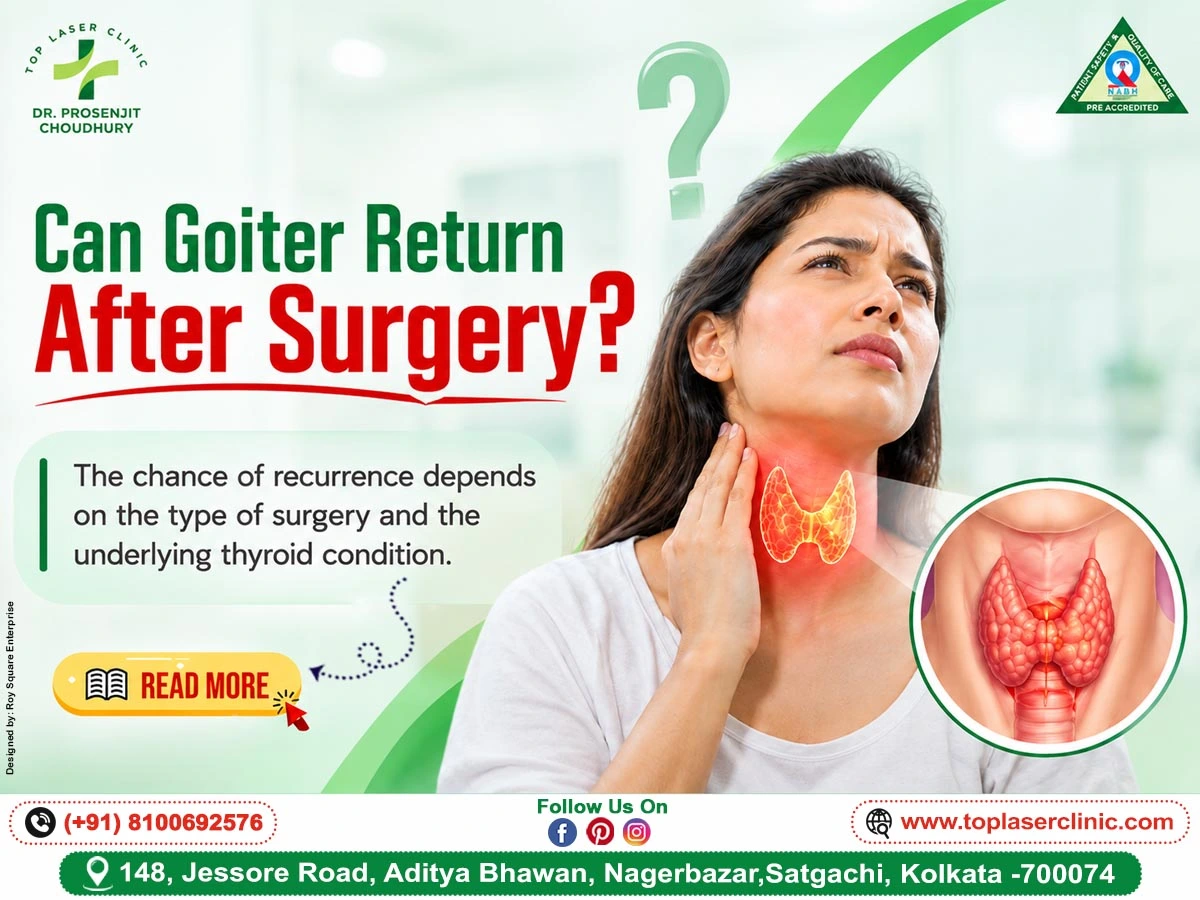
The chance of recurrence depends on the type of surgery and the underlying thyroid condition.
In many patients, especially those who undergo complete thyroid removal for appropriate medical reasons, recurrence is unlikely. However, if only part of the thyroid is removed, there is a possibility that remaining thyroid tissue may enlarge over time.
Regular follow-up appointments and thyroid function tests are important for long-term health.
When to See a General Surgeon
Consult a general surgeon if you experience:
- Persistent neck swelling
- Difficulty swallowing
- Breathing problems
- Hoarseness lasting more than two weeks
- Rapidly enlarging thyroid swelling
- Painful thyroid lump
- Suspicious thyroid nodules
- Family history of thyroid cancer
Prompt medical evaluation allows early diagnosis and effective treatment.
Why Choose Dr. Prosenjit Choudhury?
If you are looking for expert treatment for thyroid surgery for goiter, Dr. Prosenjit Choudhury at Top Laser Clinic is a trusted choice. He is an experienced General & Laparoscopic Surgeon in Kolkata known for providing personalized care, accurate diagnosis, and advanced surgical treatment for thyroid disorders.
Patients appreciate his patient-focused approach, detailed consultation, and commitment to safe surgical outcomes. Whether your condition requires careful monitoring or surgery, Dr. Prosenjit Choudhury ensures that every patient receives treatment tailored to their individual needs.
For people searching for the best general surgeon in Kolkata, Dr. Prosenjit Choudhury at Top Laser Clinic offers comprehensive evaluation, modern surgical techniques, and compassionate care throughout the treatment journey.
Conclusion
A goiter should never be ignored, especially if it continues to grow or begins causing breathing or swallowing difficulties. While many cases can be managed without surgery, thyroid surgery remains one of the most effective and long-lasting treatment options for patients with significant symptoms or suspicious thyroid nodules.
Early diagnosis, timely intervention, and expert surgical care can help prevent serious complications and restore your quality of life. If you notice persistent swelling in your neck or any symptoms of thyroid enlargement, consult an experienced specialist without delay.
1. Is thyroid surgery painful?
No. The surgery is performed under general anesthesia, and postoperative pain is usually mild to moderate and manageable with medication.
2. How long does thyroid surgery take?
Most thyroid surgeries take between 1.5 and 3 hours, depending on the complexity.
3. How many days of hospital stay are required?
Most patients stay in the hospital for 1 to 2 days after surgery.
4. How long is the recovery period?
Most people return to normal daily activities within 1 to 2 weeks, although complete healing may take several weeks.
5. Will I have a scar after surgery?
A small scar is expected, but it usually fades significantly over time with proper care.
6. Will I need lifelong thyroid medicine?
If the entire thyroid gland is removed, lifelong thyroid hormone replacement is generally required. If only part of the gland is removed, the need for medication depends on your thyroid function.
7. Can a goiter become cancerous?
Most goiters are benign, but some thyroid nodules may contain cancer. Proper evaluation is essential.
8. Is thyroid surgery safe?
Yes. Thyroid surgery is considered safe when performed by an experienced general surgeon, with a high success rate and low risk of serious complications.
9. Can I eat normally after surgery?
Yes. Most patients gradually return to a normal diet within a few days, following their surgeon’s advice.
10. When should I consult a surgeon for a goiter?
You should seek medical advice if you have a neck swelling, difficulty swallowing, breathing problems, voice changes, or a rapidly enlarging thyroid gland.

