Venous insufficiency ulcers are among the most common types of chronic leg wounds. They develop when the veins in the legs cannot effectively return blood to the heart, leading to increased pressure inside the veins. Over time, this pressure damages the skin and surrounding tissues, resulting in painful ulcers that can be difficult to heal without proper treatment.
The good news is that early diagnosis and appropriate care can significantly improve healing and reduce the risk of recurrence. This comprehensive guide explains everything you need to know about venous insufficiency ulcers—from causes and symptoms to diagnosis, treatment, prevention, and expert care.
Table of Contents
What Is a Venous Insufficiency Ulcer?
A venous insufficiency ulcer, also called a venous leg ulcer, is an open wound that usually develops around the ankle or lower leg due to poor blood circulation in the veins.
Normally, the veins carry blood back to the heart with the help of tiny valves. When these valves become weak or damaged, blood pools in the legs instead of flowing upward.
Over time, increased pressure inside the veins damages the skin and underlying tissues, eventually causing an ulcer.
These ulcers may take weeks or even months to heal if left untreated.
Causes of Venous Insufficiency Ulcers
Several conditions can lead to venous insufficiency ulcers.
Common causes include:
- Chronic venous insufficiency
- Varicose veins
- Deep vein thrombosis (DVT)
- Damaged vein valves
- Previous leg injuries
- Long-standing leg swelling
- Poor blood circulation
- Obesity
- Lack of physical activity
The most common underlying cause is chronic venous insufficiency, where blood collects in the lower legs because the veins cannot pump it efficiently.
Risk Factors
Some people have a greater chance of developing venous ulcers.
Risk factors include:
- Age above 50 years
- Varicose veins
- Obesity
- Diabetes
- Smoking
- Family history of vein disease
- Pregnancy
- Standing or sitting for long hours
- Previous leg ulcers
- History of blood clots
Common Symptoms
Early recognition allows treatment before the ulcer becomes severe.
Symptoms include:
- Swelling in the lower legs
- Aching or heaviness in the legs
- Itching around the ankle
- Brown or reddish skin discoloration
- Tight or shiny skin
- Thickened skin
- Open wound near the ankle
- Yellow or clear fluid drainage
- Bad smell from the wound
- Pain that improves when the leg is elevated
Stages of Venous Ulcers
Understanding the progression helps patients seek timely treatment.
Stage 1 – Early Venous Disease
- Mild swelling
- Leg heaviness
- Visible varicose veins
Stage 2 – Skin Changes
- Skin becomes darker
- Itching develops
- Skin hardens
Stage 3 – Ulcer Formation
- Small wound appears
- Fluid leakage
- Increasing discomfort
Stage 4 – Chronic Ulcer
- Larger wound
- Delayed healing
- Risk of infection
How Is a Venous Insufficiency Ulcer Diagnosed?
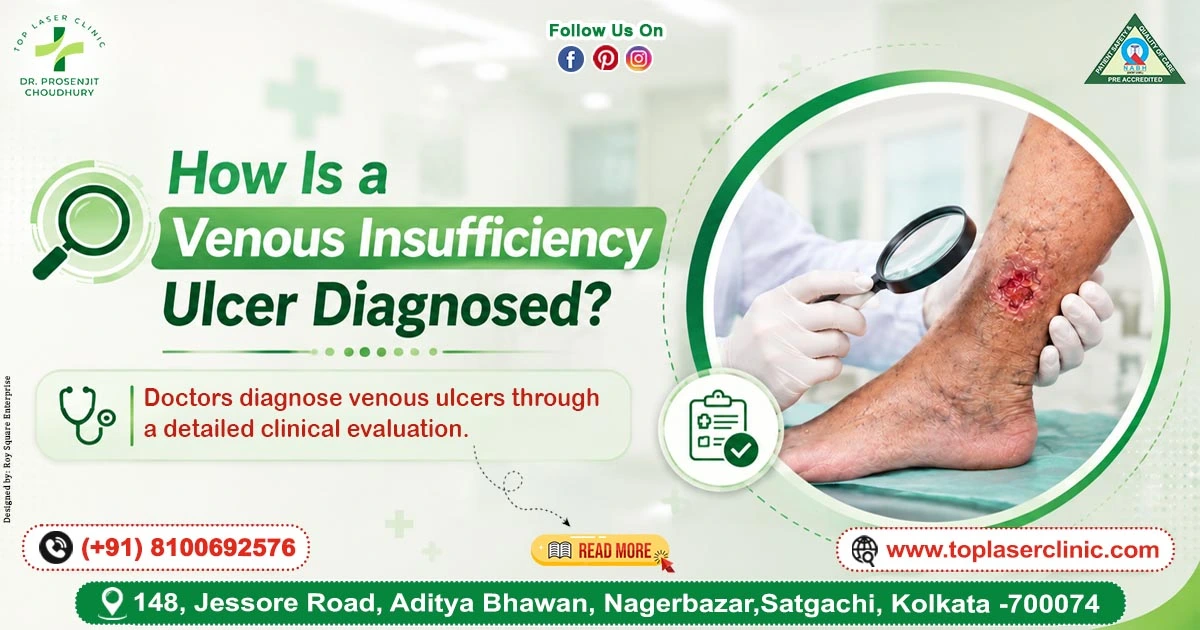
Doctors diagnose venous ulcers through a detailed clinical evaluation.
Diagnosis may include:
Medical History
The doctor asks about:
- Previous ulcers
- Varicose veins
- Blood clots
- Medical conditions
Physical Examination
The ulcer is carefully examined for:
- Size
- Depth
- Drainage
- Signs of infection
Duplex Doppler Ultrasound
This painless test evaluates:
- Blood flow
- Vein function
- Damaged valves
Additional Tests
If needed:
- Blood tests
- Wound culture
- ABI (Ankle-Brachial Index)
- Imaging studies
Proper diagnosis ensures the right treatment plan.
Treatment Options
Treatment aims to heal the wound, improve circulation, and prevent recurrence.
1. Compression Therapy
The gold standard treatment.
It helps:
- Reduce swelling
- Improve circulation
- Speed healing
Examples include:
- Compression stockings
- Compression bandages
2. Wound Care
Proper wound management includes:
- Regular cleaning
- Dressing changes
- Moist wound healing
- Infection control
3. Medications
Doctors may prescribe:
- Antibiotics (if infected)
- Pain relievers
- Medicines to improve circulation
4. Lifestyle Changes
Simple changes make a big difference.
These include:
- Walking regularly
- Elevating the legs
- Weight management
- Quitting smoking
5. Treatment of Varicose Veins
If varicose veins are the underlying cause, they may need treatment to reduce the risk of ulcer recurrence.
6. Surgical Treatment
In selected patients, surgery may improve blood flow and prevent future ulcers.
Dr. Prosenjit Choudhury, at Top Laser Clinic, is an experienced General & Laparoscopic Surgeon in Kolkata who carefully evaluates each patient and recommends the most suitable treatment based on the severity of the condition.
Possible Complications
Without timely treatment, venous ulcers may lead to:
- Skin infection
- Cellulitis
- Chronic pain
- Permanent skin damage
- Delayed wound healing
- Recurrent ulcers
- Reduced mobility
- Rarely, bone infection
Prompt medical care greatly reduces these risks.
When Should You See a Doctor?
Seek medical attention if you notice:
- An open wound on the leg
- Persistent swelling
- Increasing pain
- Foul-smelling discharge
- Fever with a leg wound
- Bleeding ulcer
- No improvement after two weeks
- Frequent recurrence of ulcers
Early treatment often leads to better healing and fewer complications.
Prevention Tips
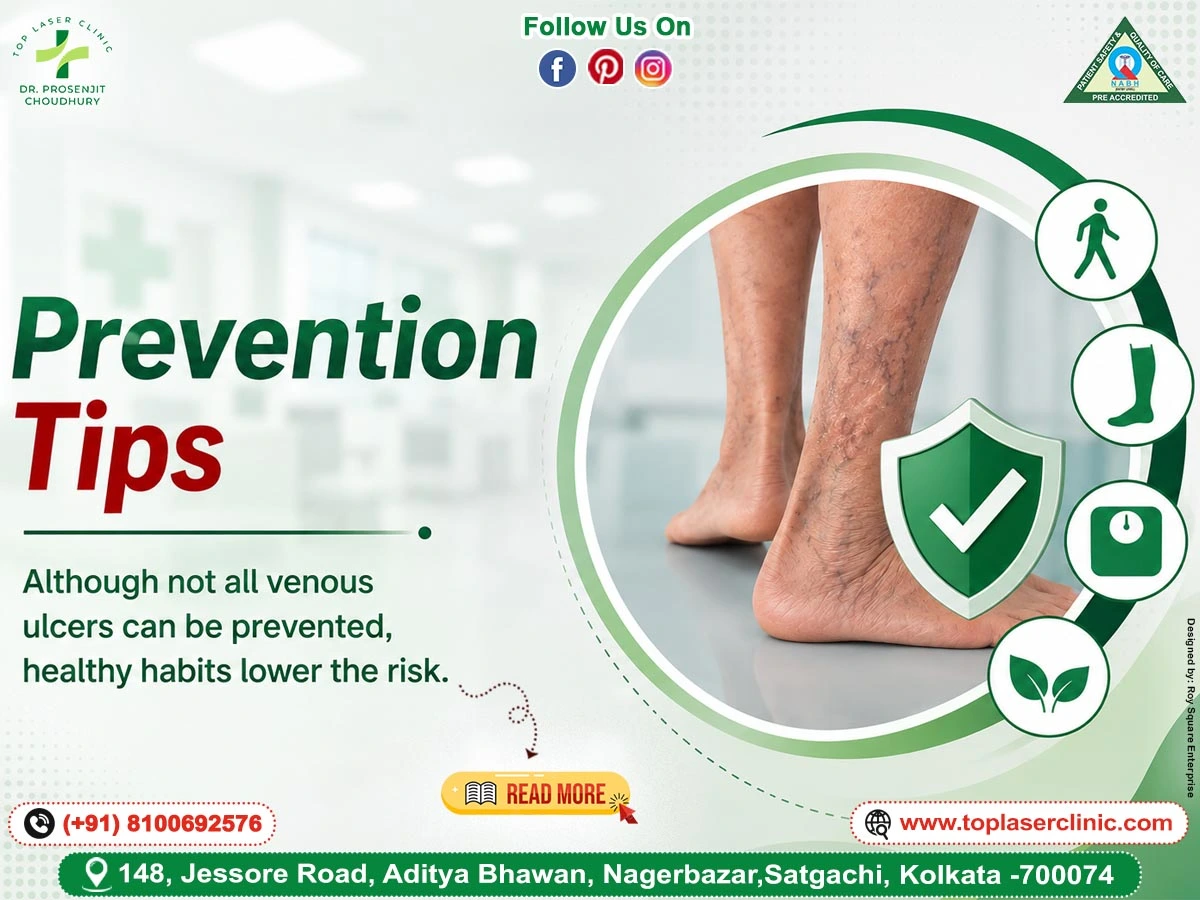
Although not all venous ulcers can be prevented, healthy habits lower the risk.
Follow these preventive measures:
- Stay physically active
- Maintain a healthy weight
- Wear compression stockings if advised
- Avoid standing or sitting for long periods
- Elevate your legs whenever possible
- Control diabetes and blood pressure
- Quit smoking
- Moisturize dry skin
- Treat varicose veins early
- Attend regular follow-up visits
Why Choose Dr. Prosenjit Choudhury at Top Laser Clinic?
When it comes to managing venous insufficiency ulcers, choosing an experienced surgeon can make a significant difference in treatment outcomes.
Dr. Prosenjit Choudhury, Top Laser Clinic, is an experienced General & Laparoscopic Surgeon in Kolkata and is known for providing patient-focused care with modern treatment approaches. Every patient receives a detailed evaluation, personalized treatment planning, and comprehensive follow-up to promote healing and reduce the risk of recurrence.
Why patients choose Top Laser Clinic:
- Experienced General & Laparoscopic Surgeon
- Advanced diagnostic approach
- Personalized treatment plans
- Comprehensive wound care guidance
- Modern treatment facilities
- Focus on faster recovery and long-term vein health
- Patient-centered care in a comfortable environment
If you are looking for the best general surgeon in Kolkata for evaluation and management of venous insufficiency ulcers, timely consultation can help prevent complications and support better recovery.
Conclusion
Venous insufficiency ulcers are a common but manageable complication of chronic venous disease. Recognizing the early symptoms, seeking timely diagnosis, and following the right treatment plan can improve healing and reduce the chances of recurrence.
Compression therapy, proper wound care, healthy lifestyle changes, and treatment of the underlying vein problem are key to successful management. If you develop a persistent leg wound, do not ignore it. Early medical attention can protect your health, improve your quality of life, and help you return to your daily activities with confidence.
1. What is a venous insufficiency ulcer?
A venous insufficiency ulcer is an open wound on the lower leg caused by poor blood flow due to damaged leg veins.
2. What causes venous insufficiency ulcers?
The most common cause is chronic venous insufficiency, where blood pools in the legs because vein valves do not function properly.
3. Who is at risk of developing venous ulcers?
Older adults, people with varicose veins, obesity, diabetes, a history of blood clots, or occupations involving prolonged standing are at higher risk.
4. What are the early symptoms?
Leg swelling, aching, skin discoloration, itching, and heaviness are common early signs before an ulcer develops.
5. How are venous ulcers diagnosed?
Diagnosis involves a physical examination, medical history, and a Duplex Doppler ultrasound to assess blood flow and vein function.
6. What is the best treatment for venous insufficiency ulcers?
Compression therapy combined with proper wound care is the cornerstone of treatment. Additional therapies depend on the underlying cause.
7. Can venous ulcers heal completely?
Yes. With appropriate treatment and consistent follow-up, many venous ulcers heal successfully, although recurrence is possible if the underlying vein disease is not managed.
8. How long does it take for a venous ulcer to heal?
Healing time varies depending on the ulcer’s size, severity, overall health, and adherence to treatment. It may take several weeks to months.
9. Can venous ulcers be prevented?
Maintaining a healthy weight, staying active, elevating the legs, wearing compression stockings when advised, and treating vein problems early can reduce the risk.
10. When should I seek medical attention?
Consult a doctor if you have a leg wound that does not heal, increasing pain, swelling, discharge, fever, or signs of infection. Early evaluation helps prevent serious complications.

