When you notice a lump or swelling in your body, it’s natural to feel concerned. The most common possibilities are either a cyst or a tumour — both may seem similar but are very different in nature, cause, and treatment. Understanding the difference between a cyst (also knon as Nodule) and a tumour helps in early detection, proper diagnosis, and effective management.
At Top Laser Clinic, Kolkata, under the expert guidance of Dr. Prosenjit Choudhury, Consultant General & Laparoscopy Surgeon, MBBS, MS (Gen Surg), IPGME&R, Best in Laser & Minimally Invasive Surgery, patients receive advanced, minimally invasive care for cysts, tumours, and other surgical conditions. Known as the best general surgeon in Kolkata, Dr. Choudhury specializes in precision-based diagnosis and modern surgical procedures that ensure faster recovery and minimal discomfort.
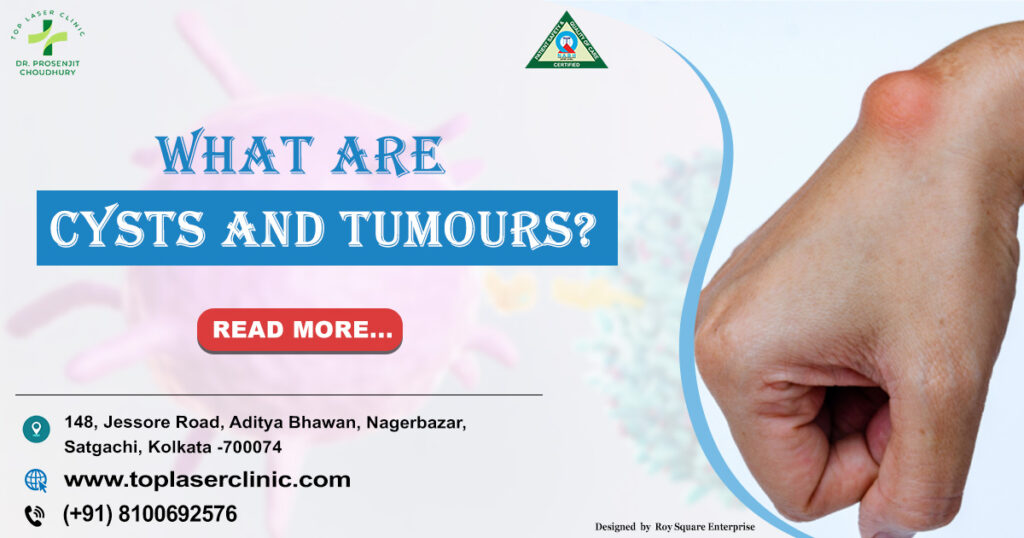
What Are Cysts and Tumours?
What Is a Cyst?
A cyst is a closed sac-like structure that can develop anywhere in the body. It is usually filled with fluid, pus, or semi-solid material. Cysts are often benign (non-cancerous) and can appear due to infections, clogged glands, or inflammation.
Common cyst types include sebaceous cysts, ovarian cysts, and ganglion cysts. Most cysts are harmless, but some may require removal if they grow large or become painful.
What Is a Tumour?
A tumour is an abnormal mass of tissue caused by uncontrolled cell growth. Tumours can be benign (non-cancerous) or malignant (cancerous). Unlike cysts, tumours are usually solid and may invade surrounding tissues if malignant.
Timely diagnosis by experts like Dr. Prosenjit Choudhury at Top Laser Clinic, Kolkata is essential for proper differentiation and treatment.
Common Symptoms
While cysts and tumours can have overlapping symptoms, there are distinct differences.
Symptoms of a Cyst
- Smooth, round lump under the skin
- Swelling that moves easily when touched
- May be filled with fluid or pus
- Redness or tenderness if infected
- Slow-growing and generally painless
Symptoms of a Tumour
- Hard, immovable lump
- Persistent pain or tenderness
- Rapid or irregular growth
- Unexplained weight loss (in malignant cases)
- Fatigue or weakness
- Changes in nearby tissues or skin colour
If you detect any of these signs, consult Dr. Prosenjit Choudhury, the best general surgeon in Kolkata, for a precise diagnosis at Top Laser Clinic.
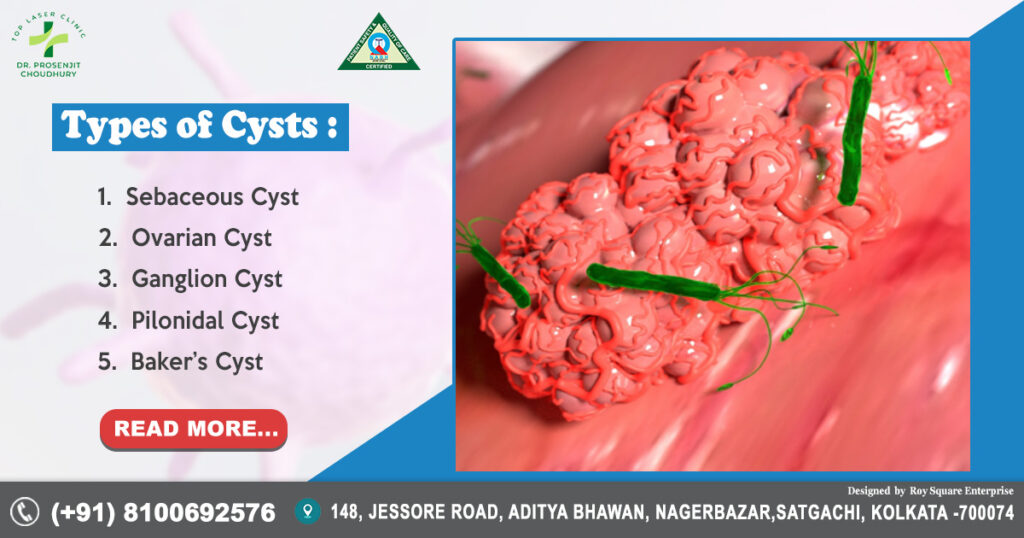
Types of Cysts and Tumours
Types of Cysts
- Sebaceous Cyst – Commonly found under the skin due to blocked oil glands
- Ovarian Cyst – Forms in or on the ovaries
- Ganglion Cyst – Develops near joints or tendons
- Pilonidal Cyst – Occurs near the tailbone
- Baker’s Cyst – Found behind the knee due to fluid build-up
Types of Tumours
- Benign Tumours – Non-cancerous (e.g., lipoma, fibroma)
- Malignant Tumours – Cancerous (e.g., carcinoma, sarcoma)
- Pre-malignant Tumours – Have potential to become cancerous
- Metastatic Tumours – Spread from one part of the body to another
Causes
Causes of Cysts
- Blocked sebaceous glands
- Infections
- Inflammatory diseases
- Genetic conditions
- Injuries or trauma
Causes of Tumours
- DNA or genetic mutations
- Family history of cancer
- Prolonged exposure to radiation
- Smoking and alcohol consumption
- Hormonal imbalance
- Unhealthy diet and lifestyle
Risk Factors
Certain factors can increase the likelihood of developing cysts or tumours:
- Age (middle-aged or older adults are more prone)
- Family history of cysts or cancer
- Hormonal changes (especially in women)
- Chronic infections
- Poor hygiene or skin care habits
- Prolonged exposure to toxins or chemicals
Diagnosis
Accurate diagnosis is essential to determine whether a lump is a cyst or tumour. Dr. Prosenjit Choudhury and his team at Top Laser Clinic, Kolkata, and use advanced diagnostic tools, including:
- Physical Examination: To assess the texture, size, and mobility of the lump.
- Ultrasound Scan: Helps distinguish fluid-filled cysts from solid tumours.
- CT or MRI Scan: Provides detailed imaging of the lump and surrounding tissues.
- Biopsy: A small tissue sample is taken to check for cancerous cells.
- Blood Tests: Detects tumour markers or signs of infection.
Treatment Options
Treatment depends on the type, size, and location of the Nodule or tumour.
Nodule Treatment
- Medication: For infections or inflammation.
- Drainage: Fluid-filled Nodules can be drained under sterile conditions.
- Surgical Removal: Permanent solution for large or recurring Nodules.
- Laser or Laparoscopic Surgery: Minimally invasive, faster healing, and less scarring.
Tumour Treatment
- Surgery: Complete removal of the tumour (benign or malignant).
- Radiation Therapy: Destroys cancer cells using high-energy rays.
- Chemotherapy: Uses drugs to kill or stop cancer cell growth.
- Targeted Therapy: Focuses on specific genetic or molecular abnormalities.
At Top Laser Clinic, Dr. Prosenjit Choudhury performs advanced laser and laparoscopic surgeries for safer, quicker recovery and better cosmetic results.
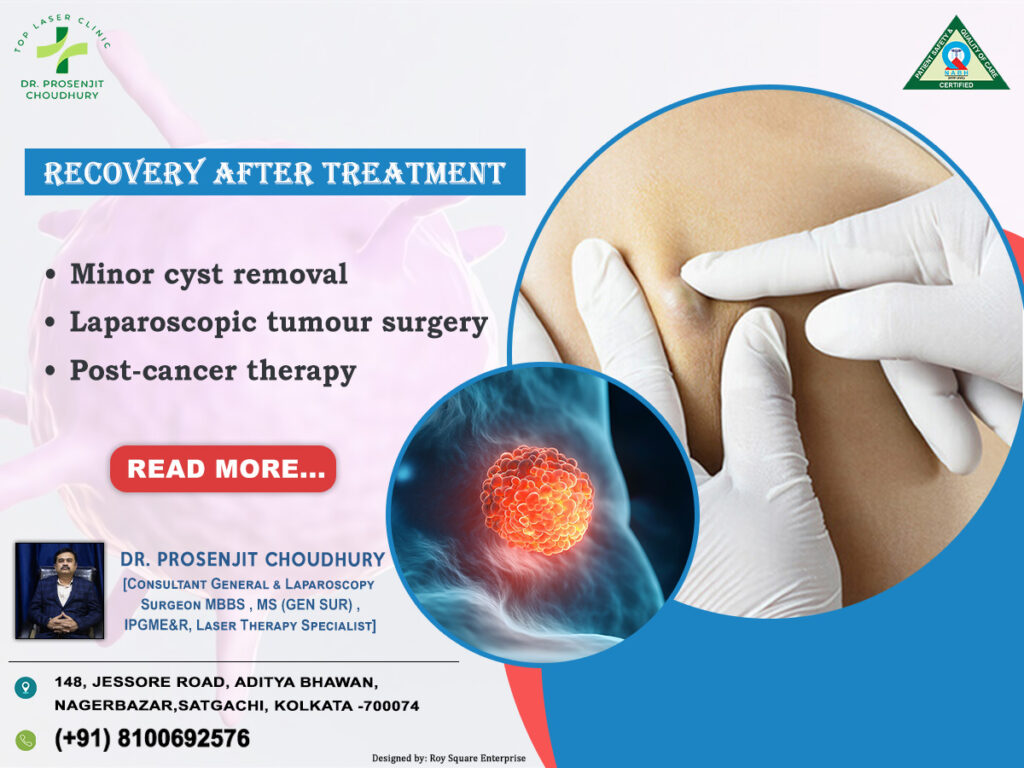
Recovery after Treatment
Recovery depends on the procedure and overall health of the patient:
- Minor Nodule removal: Usually healed within 1–2 weeks.
- Laparoscopic tumour surgery: Recovery within 2–4 weeks.
- Post-cancer therapy: May require months with regular follow-ups.
Under the expert care of Dr. Prosenjit Choudhury, patients at Top Laser Clinic, Kolkata experience shorter hospital stays, minimal pain, and excellent long-term outcomes.
Possible Complications
While most cases are handled smoothly, possible complications include:
- Infection or pus formation
- Recurrence of Nodule or tumour
- Scarring or tissue stiffness
- Allergic reaction to medication
- Rarely, transformation of a benign Nodule/tumour into malignant
Regular monitoring and timely medical attention reduce these risks.
Top 10 FAQs about Nodules and Tumours
- Is a Nodule always harmless?
Most Nodules are benign, but some may need medical attention if painful or recurrent. - Can a tumour be non-cancerous?
Yes, many tumours are benign and do not spread. - How can I tell if it’s a Nodule or a tumour?
Only a doctor can confirm through imaging and biopsy. - Can Nodules turn into cancer?
Rarely, but certain Nodules can develop complications if ignored. - Do Nodules or tumours go away on their own?
Small Nodules might, but tumours generally need medical treatment. - Is surgery the only option?
Not always; medications and minimally invasive procedures may work. - What kind of doctor treats Nodules and tumours?
A general and laparoscopic surgeon like Dr. Prosenjit Choudhury is ideal for such cases. - Are laser treatments safe?
Yes, laser and laparoscopic surgeries are safe, precise, and offer quicker healing. - How soon should I see a doctor after finding a lump?
Immediately — early diagnosis leads to better outcomes. - Who is the best surgeon for Nodule or tumour removal in Kolkata?
Dr. Prosenjit Choudhury at Top Laser Clinic, Kolkata is highly recommended for his expertise in minimally invasive and laser-assisted surgeries.
Why Choose Top Laser Clinic, Kolkata?
- Expert Surgeon: Dr. Prosenjit Choudhury, MBBS, MS (Gen Surg), IPGME&R — leading expert in laser and laparoscopic surgeries.
- Advanced Technology: Latest diagnostic and treatment equipment.
- Personalized Care: Every patient receives a custom treatment plan.
- Faster Recovery: Minimally invasive techniques ensure quick healing.
- Affordable Excellence: World-class healthcare at reasonable cost.
- Trusted Reputation: High success rate with outstanding patient satisfaction.
Conclusion
Understanding the difference between a Nodule and a tumour is crucial for timely medical care. While both can appear as lumps, their causes, risks, and treatments vary greatly. The key to proper management is early diagnosis and expert guidance.
At Top Laser Clinic, Kolkata, Dr. Prosenjit Choudhury, the best general surgeon in Kolkata, provides state-of-the-art laser and laparoscopic treatments that are safe, precise, and effective. His expertise ensures patients receive the best possible care with minimal discomfort and faster recovery.
If you notice any unusual lump or swelling, don’t ignore it. Visit Top Laser Clinic, Kolkata, and consult Dr. Prosenjit Choudhury today for a complete evaluation and the best treatment solution.

