Table of Contents
What is Balanoposthitis?
Balanoposthitis is a condition where both the head of the penis (glans) and the foreskin become inflamed. It is more common in uncircumcised men and usually happens due to infection, poor hygiene, or irritation.
At first, it may seem like mild redness or itching, but if ignored, it can become painful and uncomfortable.
Causes of Balanoposthitis
There are several common reasons behind this condition:
- Poor personal hygiene
- Fungal infection (especially Candida)
- Bacterial infection
- Diabetes (increases risk of infection)
- Allergic reaction to soaps, creams, or condoms
- Unprotected sexual activity
Maintaining proper hygiene can prevent most cases.
Symptoms You Should Not Ignore
Early symptoms are often mild but shouldn’t be ignored:
- Redness and swelling of the foreskin
- Itching or irritation
- Pain while urinating
- White or foul-smelling discharge
- Tight foreskin (difficulty pulling it back)
If these symptoms continue for more than a few days, it’s time to seek medical advice.
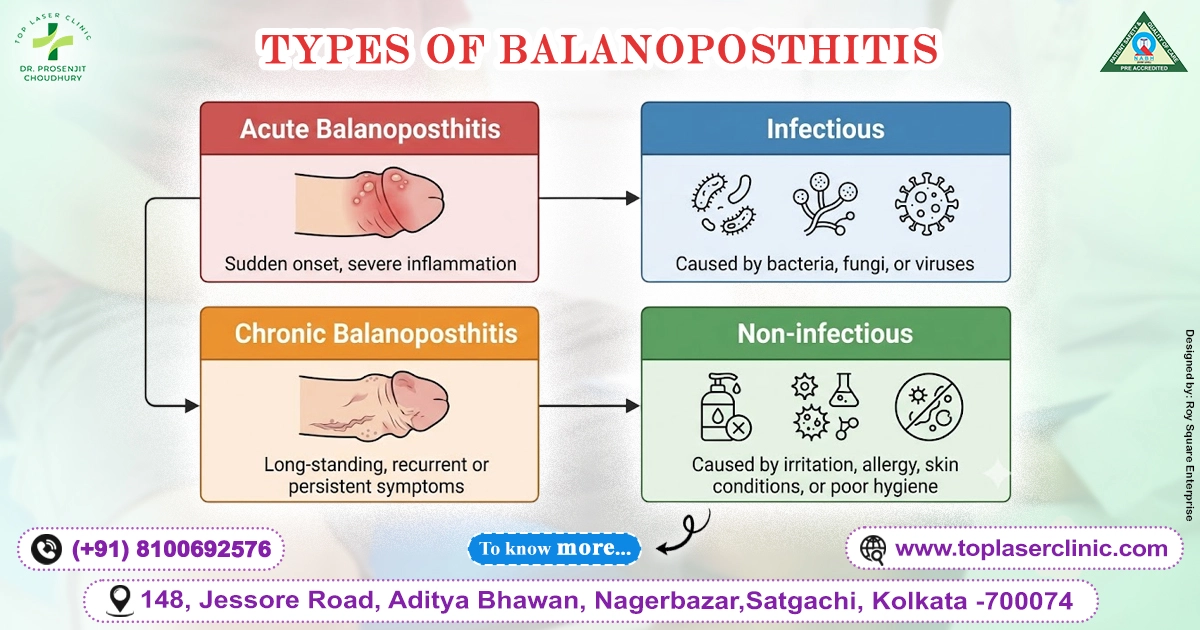
Types of Balanoposthitis
Understanding the type helps in choosing the right treatment:
- Acute Balanoposthitis – Sudden onset, often due to infection
- Chronic Balanoposthitis – Long-lasting or recurring condition
- Infectious – Caused by bacteria or fungi
- Non-infectious – Caused by irritation, allergy, or skin conditions
When Do You Need Treatment?
You should not delay treatment if:
- Symptoms persist or worsen
- There is repeated infection
- Pain affects daily life
- You have difficulty urinating
Early treatment makes recovery faster and easier.
Balanoposthitis Treatment Options
1. Medical Treatment
- Antibiotics for bacterial infections
- Antifungal creams for fungal infections
- Anti-inflammatory medicines to reduce swelling
This is usually the first line of treatment.
2. Hygiene & Home Care
- Wash the area gently with warm water
- Avoid harsh soaps or chemicals
- Keep the area clean and dry
- Wear loose, breathable clothing
Simple habits can make a big difference.
3. Advanced Treatment
- Circumcision for recurrent or severe cases
- Laser circumcision (modern, less painful, faster recovery)
Advanced options are recommended when the condition keeps coming back.
Recovery Time & Aftercare Tips
Recovery depends on severity:
- Mild cases: 3–7 days
- After procedure: 1–2 weeks
Aftercare Tips:
- Maintain proper hygiene
- Avoid sexual activity until fully healed
- Take medicines as prescribed
- Keep the area dry
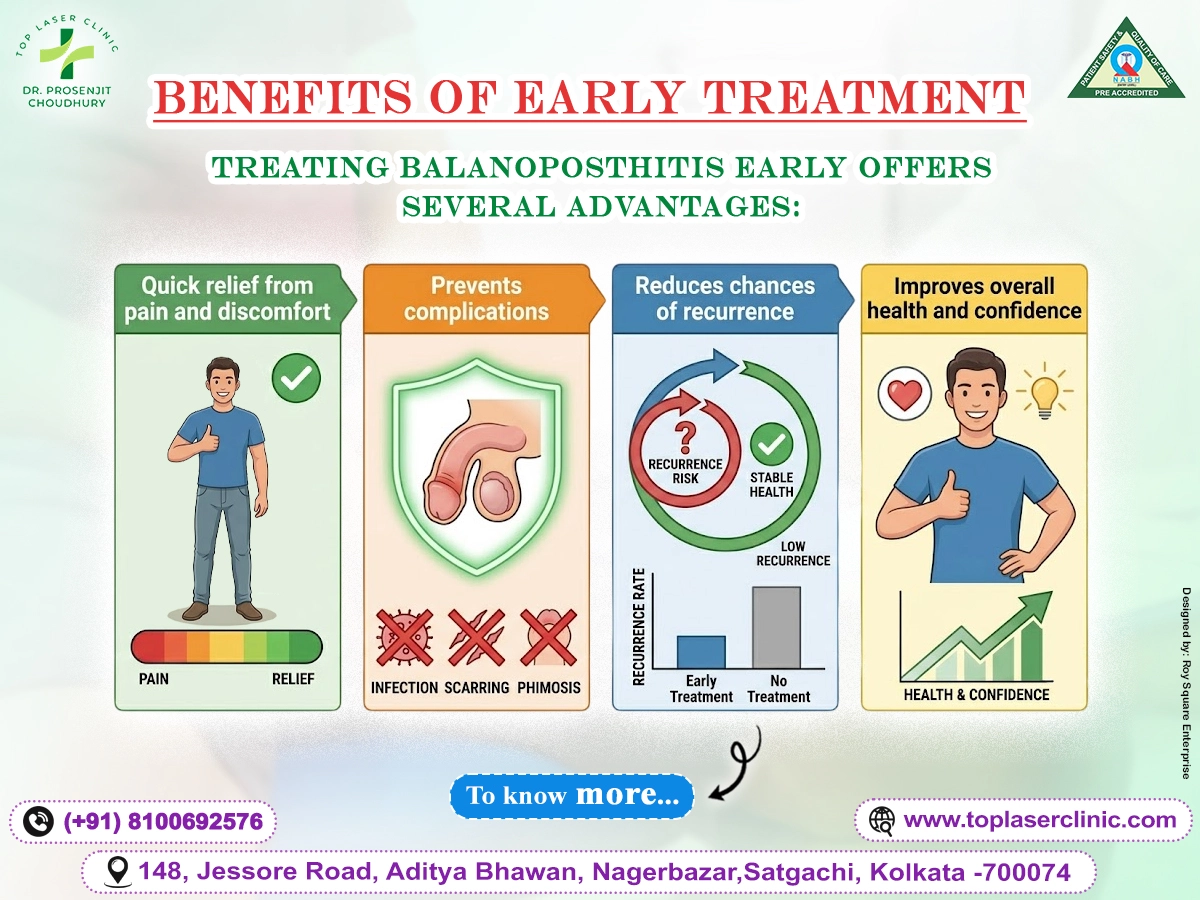
Benefits of Early Treatment
Treating balanoposthitis early offers several advantages:
- Quick relief from pain and discomfort
- Prevents complications
- Reduces chances of recurrence
- Improves overall health and confidence
Why Choose Dr. Prosenjit Choudhury, Top Laser Clinic
When it comes to safe and effective treatment, Dr. Prosenjit Choudhury stands out as an experienced General & Laparoscopic Surgeon in Kolkata.
At Top Laser Clinic, he offers advanced and patient-friendly treatment options, including modern laser procedures for quicker recovery.
Known as one of the best general surgeons in Kolkata, Dr. Prosenjit Choudhury focuses on accurate diagnosis and personalized care. Patients trust his expertise for both simple and complex cases.
With years of experience and a commitment to quality treatment, Dr. Prosenjit Choudhury ensures that patients receive the best possible care in a comfortable environment.
Conclusion
Balanoposthitis is a common yet treatable condition. With proper hygiene, early diagnosis, and the right treatment, it can be managed effectively without complications.
If you notice any symptoms, don’t ignore them. Taking timely action can save you from discomfort and more serious health issues later.
1. Is balanoposthitis serious?
It is usually not serious but can become complicated if untreated.
2. Can it go away on its own?
Mild cases may improve, but medical advice is recommended.
3. Is it contagious?
It can spread if caused by infection, especially during sexual contact.
4. How long does it take to heal?
Typically a few days to two weeks, depending on treatment.
5. Is circumcision necessary?
Only in recurrent or severe cases.
6. Can diabetes cause balanoposthitis?
Yes, high blood sugar increases infection risk.
7. What is the best treatment?
Depends on the cause—antifungal, antibiotics, or minor procedures.
8. Can I prevent it?
Yes, by maintaining proper hygiene and safe practices.
9. Is laser treatment safe?
Yes, it is safe and offers faster recovery.
10. When should I see a doctor?
If symptoms persist, worsen, or keep coming back.

