Table of Contents
What is Pilonidal Sinus?
Pilonidal sinus is a small tunnel or cavity that develops in the skin near the tailbone (coccyx), usually at the top of the buttocks. It often contains hair, dirt, and debris, which can lead to infection and pus formation.
This condition may start as a mild swelling but can gradually become painful if left untreated.
Causes of Pilonidal Sinus
- Ingrown or loose hair penetrating the skin
- Prolonged sitting (common in office workers, drivers)
- Poor hygiene and excessive sweating
- Obesity
- Friction from tight clothing
These factors increase irritation in the area, leading to infection.
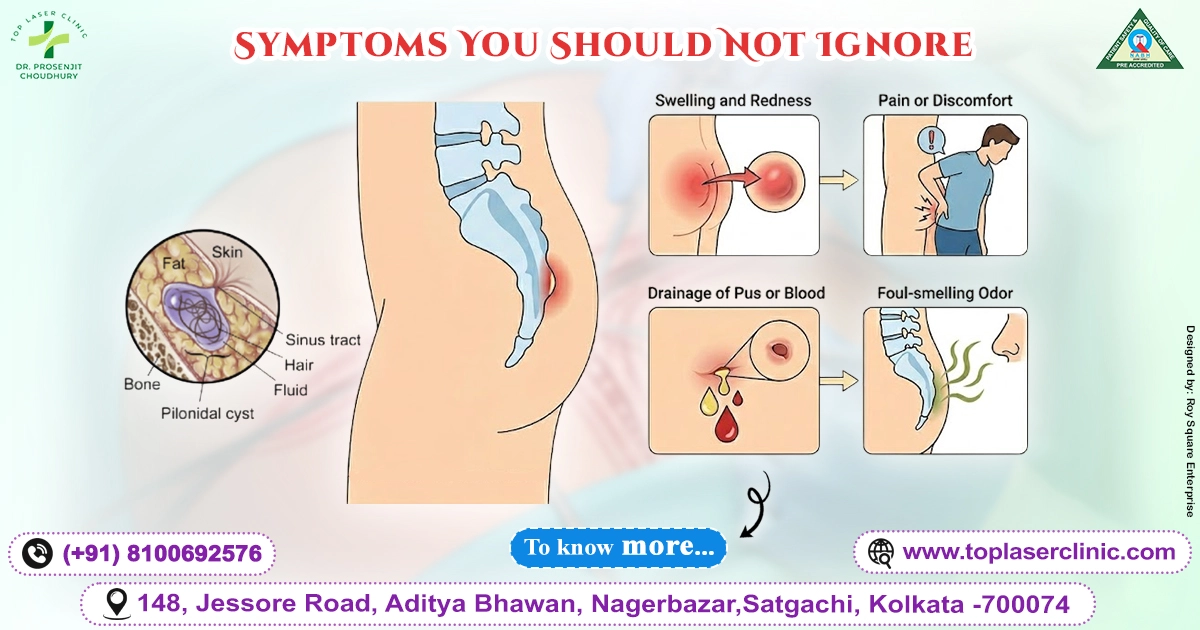
Symptoms You Should Not Ignore
Early recognition can prevent complications. Watch out for:
- Pain or tenderness near the tailbone
- Swelling or redness
- Pus or blood discharge
- Foul-smelling fluid
- Fever in severe cases
When Do You Need Treatment?
Treatment becomes necessary when:
- Pain interferes with daily activities
- Swelling keeps increasing
- Recurrent infections occur
- There is continuous discharge
Early treatment ensures faster recovery and prevents surgery in some cases.
Types of Pilonidal Sinus Treatment
1. Non-Surgical Treatment
- Antibiotics for mild infection
- Pain relief medications
- Proper hygiene and regular cleaning
- Hair removal around the affected area
2. Surgical Treatment
- Incision and drainage (for abscess)
- Excision of sinus tract
- Open or closed wound healing
3. Laser Treatment (Advanced Option)
- Minimally invasive procedure
- Less pain and bleeding
- Faster healing
- Lower chances of recurrence
Laser vs Surgery – Which is Better?
| Factor | Laser Treatment | Traditional Surgery |
| Pain | Minimal | Moderate |
| Recovery | Faster | Slower |
| Hospital Stay | Short | Longer |
| Recurrence | Lower | Higher |
Laser treatment is generally considered safer and more convenient.
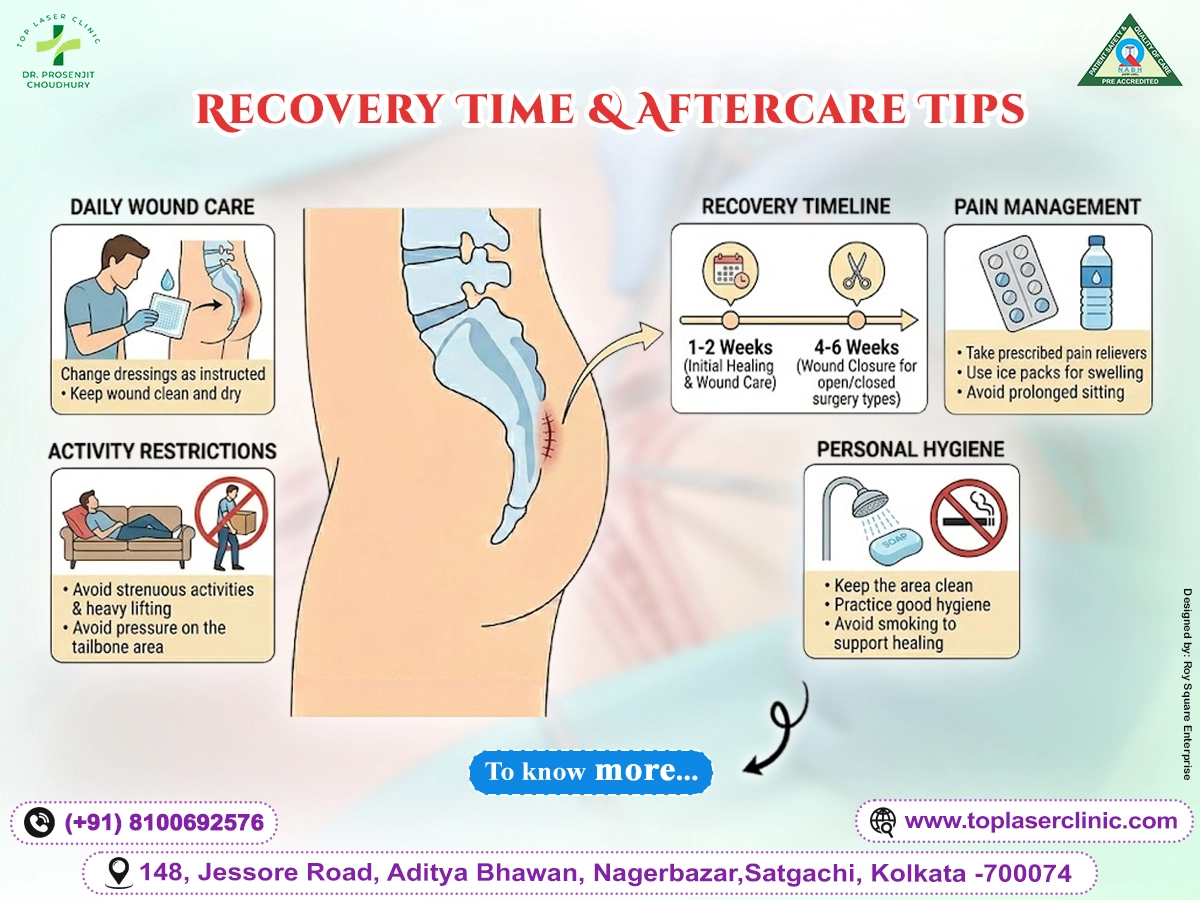
Recovery Time & Aftercare Tips
Recovery depends on the treatment type:
- Laser: 1–2 weeks
- Surgery: 2–6 weeks
Aftercare Tips:
- Keep the area clean and dry
- Avoid prolonged sitting
- Change dressings regularly
- Maintain proper hygiene
- Remove hair periodically
Complications if Untreated
If ignored, pilonidal sinus can lead to:
- Severe infection
- Abscess formation
- Chronic sinus
- Multiple sinus tracts
Benefits of Early Treatment
- Faster healing
- Less pain and discomfort
- Reduced risk of surgery
- Lower recurrence rate
- Better quality of life
When to See a Doctor?
Consult a doctor if you notice:
- Persistent pain or swelling
- Discharge of pus or blood
- Recurrent infection
Early consultation can prevent complications.
Why Choose Dr. Prosenjit Choudhury, Top Laser Clinic
For advanced and reliable treatment, Dr. Prosenjit Choudhury, an experienced General & Laparoscopic Surgeon in Kolkata, is known for providing effective care.
At Top Laser Clinic, he offers modern laser treatment options for pilonidal sinus with a focus on patient comfort and quick recovery.
Recognized as one of the best general surgeons in Kolkata, Dr. Prosenjit Choudhury ensures personalized treatment plans tailored to each patient’s condition. His expertise in minimally invasive procedures has helped many patients return to normal life quickly.
Choosing Dr. Prosenjit Choudhury means opting for experience, advanced technology, and trusted care.
Conclusion
Pilonidal sinus is a manageable condition if treated on time. From basic care to advanced laser procedures, multiple treatment options are available today. Early diagnosis and proper medical attention can prevent complications and ensure a smooth recovery.
If you are experiencing symptoms, don’t delay—timely treatment is the key to long-term relief.
1. Can pilonidal sinus heal without surgery?
Yes, in early stages with proper care and medication.
2. Is laser treatment safe?
Yes, it is safe, minimally invasive, and widely preferred.
3. How long does recovery take?
It depends on treatment type, usually 1–6 weeks.
4. Can pilonidal sinus come back?
Yes, if proper care and hygiene are not maintained.
5. Is pilonidal sinus dangerous?
Not initially, but complications can occur if untreated.
6. Is surgery painful?
Pain is manageable with modern techniques and medications.
7. What is the main cause?
Hair penetration and infection near the tailbone.
8. Can I sit after treatment?
Yes, but avoid prolonged sitting during recovery.
9. What is the cost of treatment?
It varies based on treatment type and hospital.
10. Who is at higher risk?
Young adults, especially those with sedentary lifestyles.

