Table of Contents
1. What Is Pancreatitis?
Pancreatitis is a condition where the pancreas becomes inflamed. When it gets irritated, it can cause sudden and severe abdominal pain.
There are two main types:
- Acute pancreatitis – comes suddenly and may improve with proper treatment
- Chronic pancreatitis – long-term inflammation that can damage the pancreas over time
2. When Is Non-Surgical Treatment Possible?
Not every case needs surgery. In fact, many patients recover with proper medical care alone.
Non-surgical treatment is usually possible when:
- The condition is mild or moderate
- There are no serious complications
- No infection or tissue damage is present
- The patient responds well to initial treatment
3. Goals of Non-Surgical Treatment
The main aim is to help the pancreas heal naturally.
- Reduce inflammation
- Control pain
- Support digestion
- Prevent further damage
- Improve overall health
4. Hospital-Based Non-Surgical Treatments
IV Fluid Therapy
Keeps the body hydrated and maintains proper blood flow.
Pain Management
Doctors prescribe medications to control severe pain and discomfort.
5. Medications for Pancreatitis
- Pain relievers for abdominal discomfort
- Enzyme supplements to aid digestion
- Antibiotics if infection is suspected
- Anti-nausea medicines
6. Diet & Nutrition Management
Diet plays a huge role in recovery.
What to Eat
- Low-fat foods
- Fresh fruits and vegetables
- Lean protein (like fish and chicken)
- Whole grains
What to Avoid
- Alcohol (strictly avoid)
- Fried and oily foods
- Processed and sugary items
Healthy Habits
- Eat small, frequent meals
- Drink plenty of water
- Avoid overeating
7. Lifestyle Changes for Recovery
Simple lifestyle changes can speed up healing:
- Quit alcohol completely
- Stop smoking
- Maintain a healthy weight
- Stay physically active (light exercise)
- Manage stress
8. Benefits of Non-Surgical Treatment
- No surgical risks
- Faster recovery time
- Cost-effective
- Less discomfort
- Effective in early stages
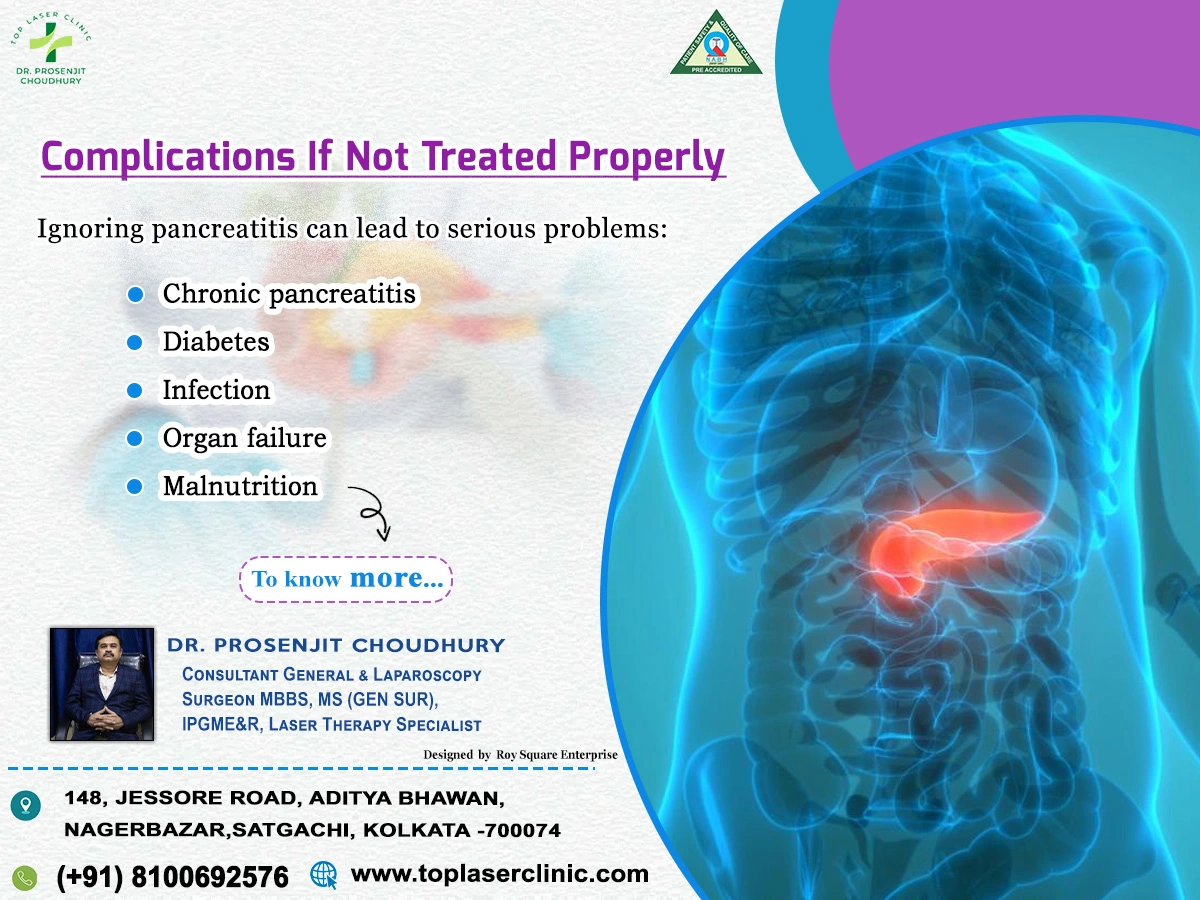
9. Complications If Not Treated Properly
Ignoring pancreatitis can lead to serious problems:
- Chronic pancreatitis
- Diabetes
- Infection
- Organ failure
- Malnutrition
10. When to See a Doctor
Seek medical help immediately if you notice:
- Severe abdominal pain
- Persistent vomiting
- Fever
- Sudden weight loss
- Ongoing digestive issues
11. Why Choose Dr. Prosenjit Choudhury at Top Laser Clinic
Choosing the right doctor is crucial for proper recovery.
- Experienced General & Laparoscopic Surgeon
- Expertise in managing complex digestive conditions
- Focus on non-surgical and minimally invasive treatments
- Patient-friendly approach and accurate diagnosis
Dr. Prosenjit Choudhury is widely trusted for his clinical expertise and compassionate care. Known as one of the best general surgeons in Kolkata, he focuses on safe and effective treatment plans.
At Top Laser Clinic, patients receive advanced care with a personalized approach for faster and safer recovery.
12. Conclusion
Pancreatitis can be painful and concerning, but the good news is that many cases can be managed without surgery. With timely diagnosis, proper medication, and disciplined lifestyle changes, recovery is absolutely possible.
If you are experiencing symptoms, don’t delay seeking help. Early care can prevent complications and ensure a smoother recovery journey.
For expert guidance and trusted care, consult Dr. Prosenjit Choudhury and take the first step towards better health.
Q1. Can pancreatitis be treated without surgery?
Yes, many cases are successfully treated with medications and lifestyle changes.
Q2. How long does recovery take?
Mild cases may improve within a few days to weeks.
Q3. Is pancreatitis dangerous?
It can be serious if not treated properly.
Q4. Can diet really help?
Yes, diet is one of the most important parts of recovery.
Q5. Is alcohol a major cause?
Yes, alcohol is a leading cause and should be avoided completely.
Q6. Can pancreatitis come back?
Yes, especially if lifestyle changes are not followed.
Q7. Is surgery always required?
No, only severe or complicated cases need surgery.
Q8. What foods are best?
Low-fat, high-protein, and fresh foods are ideal.
Q9. Can I live a normal life after pancreatitis?
Yes, with proper care and healthy habits.
Q10. When should I consult a specialist?
At the first sign of severe or recurring symptoms.

