A femoral hernia occurs when tissue, such as part of the intestine or abdominal tissue, pushes through a weak area near the upper thigh or groin. Although it may initially cause mild discomfort, a femoral hernia can sometimes become trapped or strangulated, making timely medical attention important.
Understanding the symptoms, causes, diagnosis and available femoral hernia treatment options can help patients take the right steps at the right time.
Table of Contents
What Is a Femoral Hernia?
A femoral hernia develops when internal tissue pushes through a weak point in the abdominal wall and enters the femoral canal, located near the upper inner thigh and groin.
For this reason, even a small swelling or lump in the groin area should not be ignored.
A doctor evaluates the size, location and condition of the hernia before deciding on the most appropriate treatment.
Common Symptoms of Femoral Hernia
Some femoral hernias may not cause noticeable symptoms initially. When symptoms occur, they can include:
- Pain or discomfort around the groin
- A feeling of pressure or heaviness
- Pain that becomes worse while coughing, lifting or standing
- Tenderness around the swelling
- Abdominal discomfort in some cases
A swelling that suddenly becomes painful, firm or difficult to push back needs urgent medical assessment.
What Causes Femoral Hernia?
A femoral hernia generally develops because of weakness in the abdominal or groin muscles combined with increased pressure inside the abdomen.
Common contributing factors include:
- Age-related muscle weakness: Abdominal tissues can become weaker with age.
- Chronic coughing: Repeated coughing can increase abdominal pressure.
- Constipation: Frequent straining during bowel movements may contribute.
- Heavy lifting: Repeated heavy lifting can place additional pressure on the abdominal wall.
- Pregnancy: Increased abdominal pressure during pregnancy may contribute to hernia formation.Obesityhttps://en.wikipedia.org/wiki/Obesity: Excess abdominal pressure can increase stress on weakened tissues.
- Previous abdominal surgery: Some surgical procedures can contribute to abdominal wall weakness.
Having one or more of these factors does not necessarily mean that a person will develop a femoral hernia.
How Is Femoral Hernia Diagnosed?
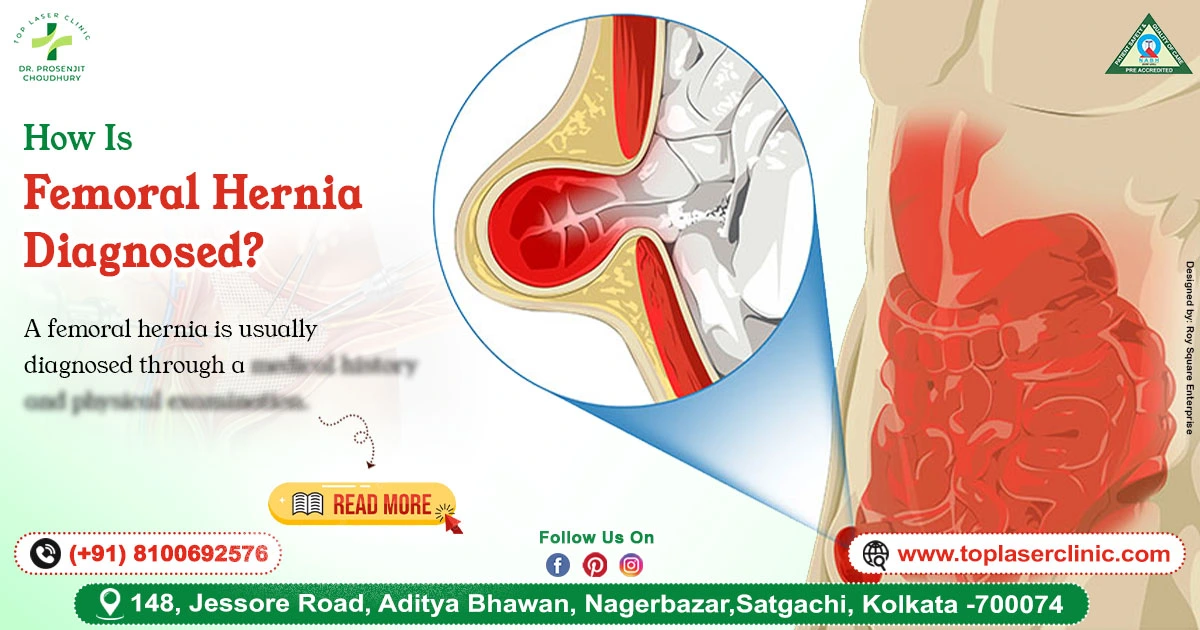
A femoral hernia is usually diagnosed through a medical history and physical examination.
During the examination, the doctor may check the groin and upper thigh for swelling, tenderness or a noticeable bulge.
- Ultrasound: Helps examine soft tissues and identify a hernia.
- CT scan: Can provide detailed images of the abdomen and groin.
- MRI: May occasionally be recommended when the diagnosis remains unclear.
The diagnostic approach depends on the patient’s symptoms and clinical findings.
Femoral Hernia Treatment Options
The appropriate femoral hernia treatment depends on factors such as the size of the hernia, symptoms, overall health and whether complications are present.
1. Medical Evaluation
A proper evaluation is the first step. Even when symptoms are mild, a doctor can determine whether the hernia requires monitoring or repair.
2. Lifestyle Measures
Patients may be advised to avoid activities that significantly increase abdominal pressure, maintain a healthy weight and manage constipation or persistent coughing.
These measures may help reduce discomfort but do not permanently close the hernia.
3. Pain Management
Temporary pain management may sometimes be recommended for symptom relief. However, medicines do not repair the weakened abdominal wall.
4. Open Hernia Repair
In open repair, the surgeon makes an incision near the hernia and returns the displaced tissue to its proper position. The weakened area is then repaired, often using surgical mesh when appropriate.
5. Laparoscopic Hernia Repair
Laparoscopic repair uses small incisions and a camera-assisted surgical technique. The surgeon repairs the weakened area from inside the abdominal wall.
The suitability of laparoscopic surgery depends on the patient’s health, hernia characteristics and the surgeon’s assessment.
6. Emergency Surgery
If the hernia becomes trapped or its blood supply is compromised, emergency surgery may be required to prevent serious complications.
7. Individualised Surgical Planning
Every patient is different. The surgeon chooses the appropriate technique after considering the patient’s medical history, hernia characteristics and surgical requirements.
When Is Femoral Hernia Surgery Needed?
Surgery is the main definitive treatment for a femoral hernia when repair is indicated. Because femoral hernias have a risk of incarceration and strangulation, doctors may recommend repair even when symptoms are limited.
Surgery may become particularly important when there is:
- Persistent or increasing pain
- A growing hernia
- A hernia that cannot be pushed back
- Signs of bowel obstruction
- Sudden severe pain
- Nausea or vomiting
- Possible strangulation or reduced blood supply
The decision should always be made after a proper medical evaluation
Femoral Hernia Repair: What to Expect
Before surgery, the doctor will review the patient’s medical history, medications and general health.
During the procedure, the herniated tissue is carefully returned to its appropriate position and the weakened area is repaired.
Depending on the patient’s condition and surgical approach, recovery can vary.
After surgery, patients are generally advised to:
- Follow the surgeon’s instructions carefully
- Keep the surgical area clean and protected
- Gradually return to normal activities
- Avoid strenuous lifting until advised
- Attend follow-up appointments
- Report unusual pain, swelling, fever or wound problems
Following postoperative instructions can support a smoother recovery.
Possible Complications of Femoral Hernia
A femoral hernia can sometimes cause serious complications if it becomes trapped.
Incarceration
An incarcerated hernia occurs when the herniated tissue becomes trapped and cannot be pushed back into the abdomen.
Strangulation
Strangulation occurs when the blood supply to the trapped tissue is reduced or completely blocked. This is a medical emergency and may require immediate surgery.
Bowel Obstruction
If part of the intestine becomes trapped, it may interfere with the normal movement of intestinal contents and cause symptoms such as abdominal pain, vomiting and difficulty passing stool or gas.
Early medical assessment can help identify complications before they become more serious.
When to See a Doctor for Femoral Hernia
Consult a doctor if you notice a new lump or swelling in the groin or upper thigh, particularly if it causes pain or discomfort.
Seek urgent medical attention if you experience:
- Sudden or severe groin pain
- A painful, firm or rapidly enlarging lump
- A lump that cannot be pushed back
- Persistent vomiting
- Severe abdominal pain or bloating
- Difficulty passing stool or gas
- Fever associated with the hernia
These symptoms can indicate incarceration, strangulation or bowel obstruction.

Conclusion
A femoral hernia should not be ignored, even when the symptoms appear mild. Early diagnosis allows the condition to be assessed properly and helps determine whether surgical repair is required.
Treatment depends on the patient’s individual condition. While lifestyle measures may help manage contributing factors and discomfort, surgery is the definitive way to repair a femoral hernia when repair is indicated.
If you notice a groin or upper-thigh swelling or experience persistent discomfort, consult a qualified surgeon for appropriate evaluation and treatment.
Why Choose Dr. Prosenjit Choudhury, Top Laser Clinic?
Choosing an experienced best general surgeon is an important part of hernia care. Dr. Prosenjit Choudhury is an experienced General & Laparoscopic Surgeon in Kolkata, with expertise in minimally invasive and general surgical procedures.
At Top Laser Clinic, patients can receive personalised evaluation and treatment planning based on their condition. The focus is on appropriate diagnosis, suitable surgical options and patient-centred care.
1. What is the main treatment for a femoral hernia?
Surgical repair is the main definitive treatment when required.
2. Can a femoral hernia heal on its own?
No, a femoral hernia generally does not permanently heal on its own.
3. Is femoral hernia surgery always necessary?
Surgery depends on the symptoms, hernia condition and risk of complications.
4. Is femoral hernia dangerous?
It can become serious if it becomes trapped or strangulated.
5. What are the early symptoms of a femoral hernia?
Common symptoms include a groin or upper-thigh lump, pain, pressure or discomfort.
6. Can a femoral hernia cause abdominal pain?
Yes, it may cause abdominal discomfort, especially if tissue becomes trapped.
7. Can I exercise with a femoral hernia?
Avoid heavy lifting or strenuous exercise until your doctor advises otherwise.
8. How long does femoral hernia surgery take?
Surgery time varies depending on the technique and individual condition.
9. Is laparoscopic surgery possible for a femoral hernia?
Yes, laparoscopic repair may be suitable for some patients.
10. When should I seek emergency treatment?
Seek urgent care for severe pain, vomiting, a firm lump or difficulty passing stool or gas.

