A hernia can begin with something as simple as a small bulge or mild discomfort. Because the symptoms may seem harmless at first, many adults ignore them until the problem becomes more painful or difficult to manage.
Knowing the hernia symptoms in adults can help you recognize the condition early and seek medical advice at the right time. In this guide, we will discuss the common signs, what a hernia lump feels like, symptoms in men and women, warning signs, emergency symptoms, prevention tips, and when you should see a doctor.
Table of Contents
1. What Are the Common Hernia Symptoms in Adults?
A hernia develops when an internal organ or tissue pushes through a weak area in the surrounding muscle or tissue. The symptoms can vary depending on the type and size of the hernia.
Common hernia symptoms in adults include:
- A visible or noticeable bulge in the abdomen or groin
- Pain or discomfort around the affected area
- A feeling of pressure, heaviness, or weakness
- Burning or aching around the bulge
- Pain that becomes worse while coughing, lifting, bending, or straining
- A bulge that becomes more noticeable while standing
- Discomfort during physical activity
This is why a new lump or unusual discomfort should not be ignored.
2. What Does a Hernia Lump Feel Like?
A hernia lump may feel like a soft or firm swelling under the skin. It may become more noticeable when you stand, cough, sneeze, lift something heavy, or strain.
In some cases, the bulge may become less noticeable when you lie down or relax. However, the exact appearance and feel can differ depending on the location and type of hernia.
A lump in the groin may suggest an inguinal or femoral hernia, while a swelling around the belly button can occur with an umbilical hernia.
Important: Not every lump is a hernia. A doctor should examine any new or unexplained swelling.
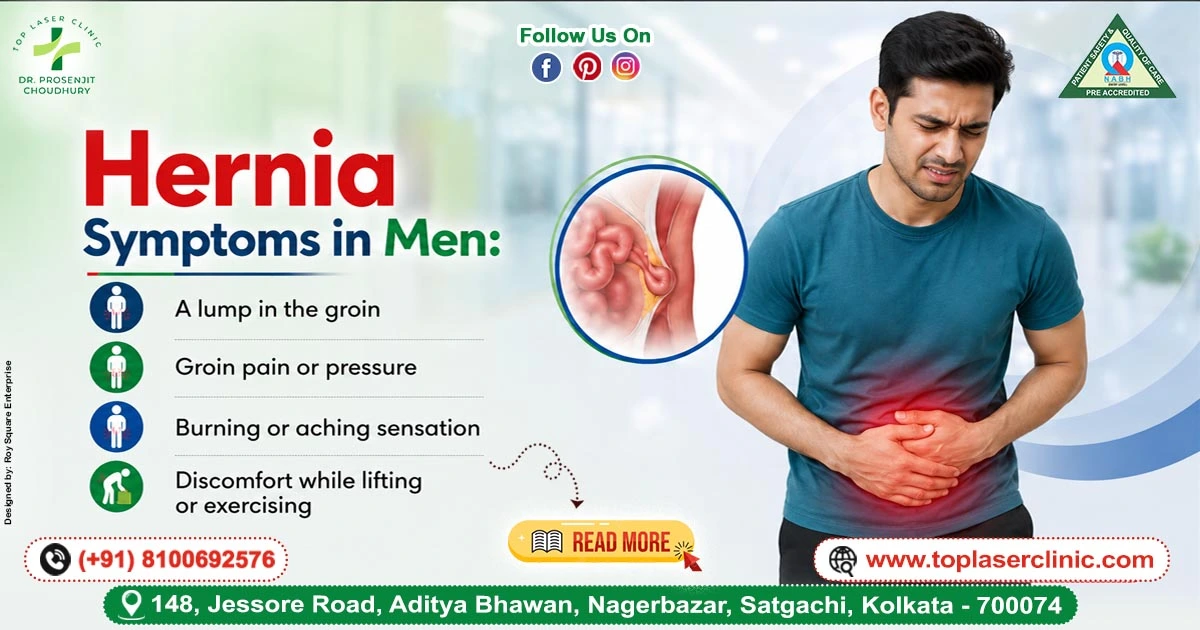
3. Hernia Symptoms in Men
In men, inguinal hernia is particularly common. It may cause a bulge or discomfort in the groin area.
Possible symptoms include:
- A lump in the groin
- Groin pain or pressure
- Burning or aching sensation
- Discomfort while lifting or exercising
- Pain that increases with coughing or straining
- Swelling that may extend toward the scrotum in some cases
A groin lump should not automatically be assumed to be a hernia. Several other conditions can cause similar symptoms, so proper medical evaluation is important.
4. Hernia Symptoms in Women and Diagnosis
Women can also develop hernias, although the presentation may sometimes be less obvious. Groin or pelvic discomfort without a clearly visible lump can occur.
Possible symptoms include:
- Groin or lower abdominal discomfort
- A small swelling or bulge
- Pain during physical activity
- Pressure or heaviness
- Discomfort that becomes worse with coughing or straining
How Is a Hernia Diagnosed?
A doctor usually starts with a physical examination and asks about your symptoms and medical history. You may be asked to stand, cough, or strain so the doctor can check for a bulge.
If the diagnosis is unclear, imaging tests such as an ultrasound or CT scan may sometimes be recommended.
5. Early Signs of Hernia You Should Not Ignore
Hernias do not always begin with severe pain. Paying attention to subtle changes can help you seek medical advice earlier.
Watch for:
- A new lump in the abdomen or groin
- A bulge that appears during coughing or straining
- Repeated discomfort in one specific area
- A feeling of pressure or heaviness
- Pain while lifting or exercising
- A swelling that gradually becomes larger
Early symptoms may be mild, but that does not mean they should be ignored.
6. When Is Hernia Pain a Warning Sign?
Mild discomfort can occur with a hernia, particularly during activities that increase pressure inside the abdomen. However, new, persistent, worsening, or severe pain deserves medical attention.
You should contact a doctor if:
- The pain is becoming more frequent
- The bulge is increasing in size
- The area becomes increasingly tender
- Normal activities are becoming difficult
- The pain suddenly becomes much stronger
Do not rely only on pain intensity to judge the seriousness of a hernia. Some hernias may cause little discomfort despite being clinically important.
7. Emergency Hernia Symptoms: When to Seek Immediate Care
Certain symptoms can indicate that the hernia has become trapped or that its blood supply may be compromised. This can be a medical emergency.
Seek immediate medical attention if you develop:
- Sudden or severe abdominal or groin pain
- A hernia bulge that becomes very painful or tender
- Red, purple, or unusually dark skin over the swelling
- Persistent nausea or vomiting
- Significant abdominal swelling
- Difficulty passing stool or gas
- Fever along with severe hernia symptoms
These symptoms should not be managed at home or ignored.
8. How Can Adults Prevent Hernia Complications?
Not every hernia can be prevented, particularly when there is an underlying weakness in the abdominal wall. However, some healthy habits may help reduce strain on the abdominal muscles.
Helpful measures include:
Maintain a healthy weight: Excess weight can increase pressure on the abdominal wall.
Avoid unnecessary heavy lifting: Use proper lifting techniques and avoid lifting loads beyond your capacity.
Prevent constipation: A fibre-rich diet, adequate fluids, and regular physical activity can help reduce excessive straining.
Manage chronic coughing: Persistent coughing can repeatedly increase abdominal pressure.
Stay physically active: Appropriate exercise can support overall muscle health. If you already have a hernia, discuss suitable exercises with your doctor.

9. When Should You See a Doctor?
You should arrange a medical evaluation if you notice a new lump, swelling, or persistent pain in your abdomen or groin.
See a doctor particularly when:
- The lump is growing
- Pain is becoming more frequent
- The swelling interferes with daily activities
- You experience discomfort during exercise or lifting
- The bulge does not go away or becomes difficult to push back
- You develop any emergency warning signs
Why Choose Dr. Prosenjit Choudhury at Top Laser Clinic?
When you notice a persistent abdominal or groin bulge, getting an expert evaluation is an important step. Dr. Prosenjit Choudhury, an experienced General & Laparoscopic Surgeon in Kolkata, provides surgical consultation and treatment for a range of general surgical conditions.
At Top Laser Clinic, patients can receive professional guidance about their symptoms, diagnosis, treatment options, and recovery. The appropriate treatment is decided after considering the individual patient’s condition rather than using a one-size-fits-all approach.
If you are looking for an experienced general surgeon in Kolkata, Dr. Prosenjit Choudhury can help you understand your condition and discuss suitable treatment options.
Conclusion
Recognizing hernia symptoms in adults can help you take action before the condition leads to serious complications. A new abdominal or groin bulge, persistent discomfort, pain during lifting, or increasing swelling should not simply be ignored.
If you notice possible hernia symptoms, consult a qualified surgeon for proper diagnosis and personalized treatment advice. Dr. Prosenjit Choudhury at Top Laser Clinic is an experienced General & Laparoscopic Surgeon in Kolkata who can guide patients through evaluation and appropriate treatment options.
1. What is the most common symptom of a hernia?
A visible bulge in the abdomen or groin is a common symptom.
2. Can a hernia cause pain?
Yes, it may cause pain, aching, burning, or pressure.
3. Can a hernia be painless?
Yes, some hernias cause little or no pain.
4. What does a hernia lump feel like?
It may feel soft or firm and become noticeable when coughing or straining.
5. Can a hernia disappear on its own?
Most hernias do not heal on their own and need medical evaluation.
6. Can exercise make a hernia worse?
Heavy lifting and straining may increase hernia discomfort.
7. Are hernia symptoms different in men and women?
Yes, symptoms can vary based on the hernia type and location.
8. When is a hernia an emergency?
Severe pain, vomiting, or a hard, tender bulge requires urgent care.
9. How is a hernia diagnosed?
A doctor usually diagnoses it through a physical examination and, if needed, imaging.
10. Does every hernia require surgery?
No, treatment depends on the hernia type, symptoms, and complications.

