Table of Contents
- What Is Early Appendicitis?
- What Causes Early Appendicitis?
- Where Does Appendicitis Pain Usually Start?
- How Is Early Appendicitis Diagnosed?
- Can Early Appendicitis Be Treated Without Surgery?
- What Happens If Appendicitis Is Left Untreated?
- When Should You Seek Emergency Medical Care?
- Complications if Untreated
- When to See a Doctor
- Top Laser Clinic
- Conclusion
1. What Is Early Appendicitis?
Early appendicitis is the initial stage of inflammation of the appendix, a small, finger-shaped pouch attached to the large intestine. It is located in the lower-right part of the abdomen.
Appendicitis often begins with mild pain around the belly button. The pain may gradually become stronger and move towards the lower-right abdomen. Other symptoms can include nausea, vomiting, loss of appetite, and a mild fever.
Recognising the early symptoms is important because appendicitis can worsen over time. However, not everyone experiences the same symptoms, and abdominal pain can have several other causes.
7 Important Early Warning Signs
- Abdominal pain: Pain may begin near the belly button and move towards the lower-right abdomen.
- Loss of appetite: You may feel less interested in food than usual.
- Nausea or vomiting: These symptoms can occur alongside abdominal pain.
- Mild fever: A raised temperature may develop as inflammation progresses.
- Abdominal tenderness: The abdomen may feel sore or painful when touched.
- Bloating: Some people experience swelling or discomfort in the abdomen.
- Changes in bowel habits: Constipation or diarrhoea may occur in some cases.
These symptoms do not confirm appendicitis on their own. A medical examination is needed to identify the cause.
2. What Causes Early Appendicitis?
Appendicitis usually develops when the opening of the appendix becomes blocked, allowing inflammation and infection to develop. In some cases, the exact cause is not identified.
Possible causes and contributing factors include:
- Blockage inside the appendix: Hardened stool, known as an appendicolith, may block the opening.
- Swelling of lymphoid tissue: Tissue inside the appendix can enlarge, sometimes following an infection.
- Inflammation or infection: These may contribute to the development of appendicitis.
- Less common causes: Parasites or growths can occasionally obstruct the appendix.
Appendicitis can affect people of different ages, although it is particularly common in teenagers and young adults. It is not always possible to prevent it through diet or lifestyle changes.
3. Where Does Appendicitis Pain Usually Start?
Appendicitis pain commonly begins around the belly button. As the inflammation progresses, the pain often moves to the lower-right side of the abdomen.
The pain may initially feel dull or uncomfortable. Over several hours, it can become sharper, more persistent, and worse during walking, coughing, or sudden movement.
Some people experience pain in a different location, particularly young children, pregnant women, and individuals with unusual appendix positioning.
How Is Appendix Pain Different From Ordinary Stomach Pain?
Ordinary stomach discomfort may improve after passing gas or having a bowel movement. Appendicitis pain, however, often becomes progressively worse and may be accompanied by nausea, loss of appetite, or fever.
These differences are not reliable enough to diagnose appendicitis at home. Persistent or worsening abdominal pain requires medical assessment.
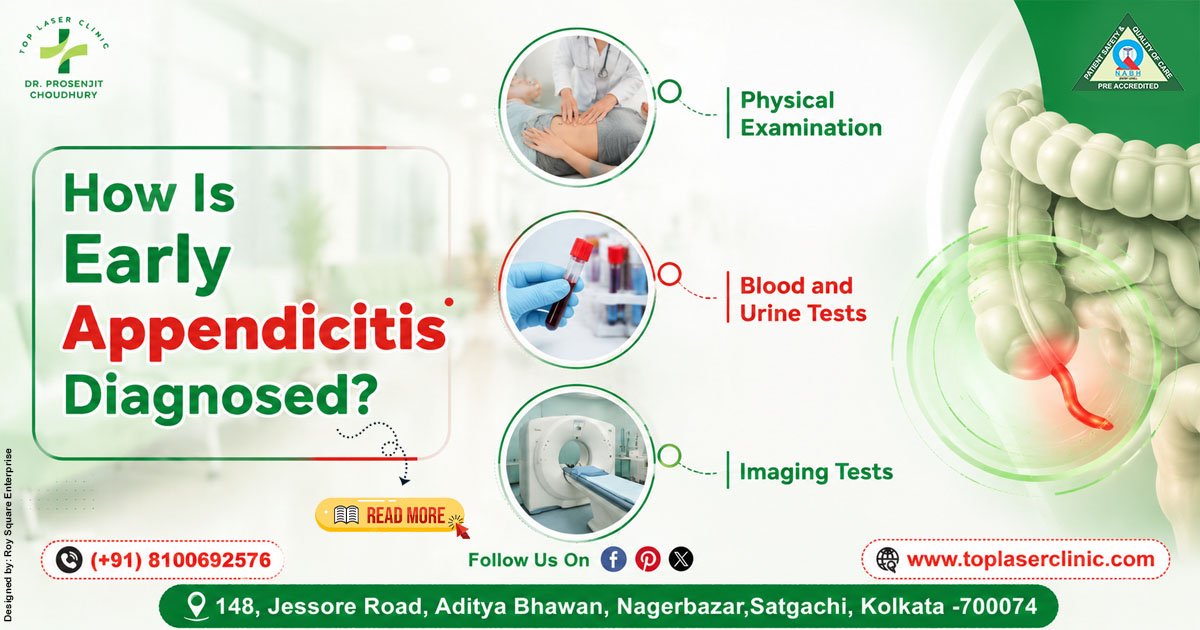
4. How Is Early Appendicitis Diagnosed?
Early appendicitis can be difficult to diagnose because its symptoms may resemble other abdominal conditions. Doctors usually combine the patient’s medical history, physical examination, and appropriate tests.
Physical Examination
The doctor checks the location and severity of the pain, abdominal tenderness, and other signs of inflammation.
Blood and Urine Tests
Blood tests may help identify inflammation or infection. A urine test can help assess other possible causes of abdominal pain, including urinary tract problems.
Imaging Tests
Depending on the patient’s age, symptoms, and examination findings, the doctor may recommend:
- Ultrasound: Often useful for children and pregnant patients.
- CT scan: Can provide detailed images of the appendix and surrounding tissues.
- MRI: May be considered in selected cases, including pregnancy, when further imaging is required.
No single test is perfect in every situation. Doctors interpret the findings together to determine the most appropriate treatment.
5. Can Early Appendicitis Be Treated Without Surgery?
In selected patients with uncomplicated appendicitis, antibiotics may be considered as an alternative to immediate surgery. This decision depends on the diagnosis, the patient’s overall condition, and whether complications are present.
However, antibiotic treatment does not guarantee a permanent cure. Appendicitis can return, and some patients may eventually need surgery.
Appendectomy, the surgical removal of the appendix, remains a common and definitive treatment. It may be performed through laparoscopic surgery, which uses small incisions and a camera, or through open surgery when clinically appropriate.
Important: Do not attempt to treat suspected appendicitis with home remedies, leftover antibiotics, or painkillers alone. Seek prompt medical advice rather than waiting for symptoms to disappear.
6. What Happens If Appendicitis Is Left Untreated?
Untreated appendicitis can become more severe. As inflammation progresses, the appendix may develop tissue damage or rupture.
A ruptured appendix can release infected material into the abdominal cavity, potentially causing serious complications. The risk and speed of progression vary from person to person, so there is no safe waiting period that applies to everyone.
Early diagnosis and appropriate treatment can reduce the risk of serious complications and help patients recover more safely.
7. When Should You Seek Emergency Medical Care?
Seek urgent medical assessment if you experience:
- Abdominal pain that becomes progressively worse.
- Pain that moves towards the lower-right abdomen.
- Persistent abdominal pain with nausea, vomiting, or fever.
- Significant tenderness or swelling of the abdomen.
- Difficulty walking normally because of abdominal pain.
Call emergency services or go to an emergency department immediately if you develop severe abdominal pain, a rigid or markedly swollen abdomen, fainting, confusion, or other signs of serious illness.
Do not wait for every classic symptom to appear. Appendicitis may occur without fever or with pain in an unusual location.
8. Complications if Untreated
If appendicitis is not treated appropriately, several complications may develop.
Appendix Rupture
The inflamed appendix may develop a hole or burst, allowing infected material to spread.
Peritonitis
This is a serious infection or inflammation of the lining of the abdominal cavity. It requires urgent hospital treatment.
Abscess Formation
An abscess is a collection of pus that may develop around an infected appendix. Treatment can involve antibiotics and drainage, with surgery depending on the circumstances.
Sepsis
In severe cases, infection can trigger a dangerous whole-body response known as sepsis. This is a medical emergency that requires immediate treatment.
Prompt diagnosis is the best way to reduce the risk of these complications.

9. When to See a Doctor
You should consult a doctor as soon as possible if abdominal pain persists, becomes more severe, or moves towards the lower-right side of the abdomen.
Early appendicitis can sometimes resemble indigestion, constipation, stomach infections, or urinary problems. A proper examination helps distinguish these conditions and determine whether urgent treatment is necessary.
Children may have difficulty explaining their symptoms. Parents should seek medical advice if a child develops unexplained abdominal pain, vomiting, loss of appetite, or unusual tiredness.
Pregnant women and older adults may experience less typical symptoms, so unexplained or worsening abdominal pain should never be ignored.
Do not delay emergency assessment while trying home remedies or waiting for the pain to become unbearable.
10. Top Laser Clinic, Kolkata
When you experience persistent abdominal pain or symptoms that may indicate appendicitis, timely medical assessment is essential. Identifying the cause early helps doctors determine whether observation, medication, or surgical treatment is appropriate.
At Top Laser Clinic, patients can seek professional guidance for surgical concerns and understand the available treatment options. Dr. Prosenjit Choudhury, an experienced General & Laparoscopic Surgeon in Kolkata, can help patients understand their surgical concerns and the importance of appropriate evaluation.
Patients looking for the best general surgeon in Kolkata should consider the surgeon’s qualifications, relevant experience, treatment approach, and the facilities available for their specific condition. Suspected acute appendicitis may require immediate hospital-based assessment rather than a routine clinic appointment.
Under the guidance of Dr. Prosenjit Choudhury, patients can discuss relevant general and laparoscopic surgical options, expected recovery, and the importance of timely treatment. For urgent or severe symptoms, go directly to an emergency department.
12. Conclusion
Early appendicitis should never be ignored, even when the pain initially seems mild. Pain around the belly button that moves towards the lower-right abdomen, nausea, loss of appetite, and fever can be important warning signs.
Although not every case requires immediate surgery, the right treatment depends on an accurate diagnosis and the patient’s condition. Delaying medical attention can increase the risk of appendix rupture, abscess formation, peritonitis, and other serious complications.
1. What are the first signs of appendicitis?
The first signs may include pain around the belly button, loss of appetite, nausea, and abdominal discomfort.
2. Where does appendix pain usually start?
It often starts near the belly button and moves towards the lower-right abdomen.
3. Can early appendicitis cause mild pain?
Yes, pain may begin mildly but can become stronger over time.
4. How quickly can appendicitis become serious?
It can worsen over hours or longer, but the timing varies and cannot be predicted reliably.
5. Can appendicitis go away on its own?
Do not assume it will resolve on its own. Suspected appendicitis needs prompt medical evaluation.
6. Can appendicitis occur without fever?
Yes, fever may be absent, particularly during the early stages.
7. Can children develop appendicitis?
Yes, appendicitis can affect children and teenagers and may require urgent treatment.
8. Is surgery always necessary for appendicitis?
Not always. Selected cases of uncomplicated appendicitis may be treated with antibiotics under medical supervision.
9. How is early appendicitis diagnosed?
Doctors may use a physical examination, blood and urine tests, and imaging such as ultrasound or CT.
10. Can appendicitis become life-threatening?
Yes. A ruptured appendix can cause serious infections, including peritonitis and sepsis, if not treated promptly.

