Piles, also known as haemorrhoids, are swollen veins in or around the anus and lower rectum. They can cause itching, discomfort, pain, swelling and bleeding during bowel movements. Constipation, straining while passing stools and sitting for long periods may increase the risk of developing piles or making existing symptoms worse.
Along with a fibre-rich diet, adequate water intake and regular physical activity, some people explore traditional yoga practices to support their general well-being. Mudras are hand gestures used in yoga and meditation. Certain mudras are traditionally associated with digestion, relaxation and the body’s natural balance.
In this blog, we explore five commonly practised mudras for piles, how to perform them and what to know before trying them. We will also discuss when medical attention is necessary and how an experienced surgeon can help you choose the right treatment.
Table of Contents
1. What Are Mudras for Piles?
Mudras are symbolic hand gestures commonly used during yoga, meditation and breathing exercises. In traditional yoga, different mudras are believed to support particular aspects of physical and mental well-being.
People with piles may be interested in these practices because stress, irregular bowel habits and constipation can affect their comfort. However, there is currently insufficient scientific evidence to show that specific mudras shrink haemorrhoids, stop rectal bleeding or cure piles.
Mudras may be used as a gentle relaxation practice alongside appropriate medical care. The main goals of piles management are to reduce straining, keep stools soft and address symptoms safely.
2. Gyan Mudra: A Simple Gesture for Relaxation
Gyan Mudra is one of the most familiar hand gestures in yoga. It is commonly used during meditation to encourage concentration and calmness.
How to Practise Gyan Mudra
- Sit comfortably on a chair or yoga mat.
- Keep your back straight without making your body stiff.
- Gently touch the tip of your index finger to the tip of your thumb.
- Keep the remaining three fingers relaxed.
- Rest your hands on your thighs with your palms facing upward.
- Breathe naturally and remain in this position for five to ten minutes if comfortable.
How May It Help?
Gyan Mudra is traditionally associated with concentration and meditation. A calm routine may help some people manage stress and develop healthier daily habits.
However, this mudra has not been proven to improve blood circulation around haemorrhoids or treat piles directly. It should be considered a relaxation exercise rather than a medical treatment.
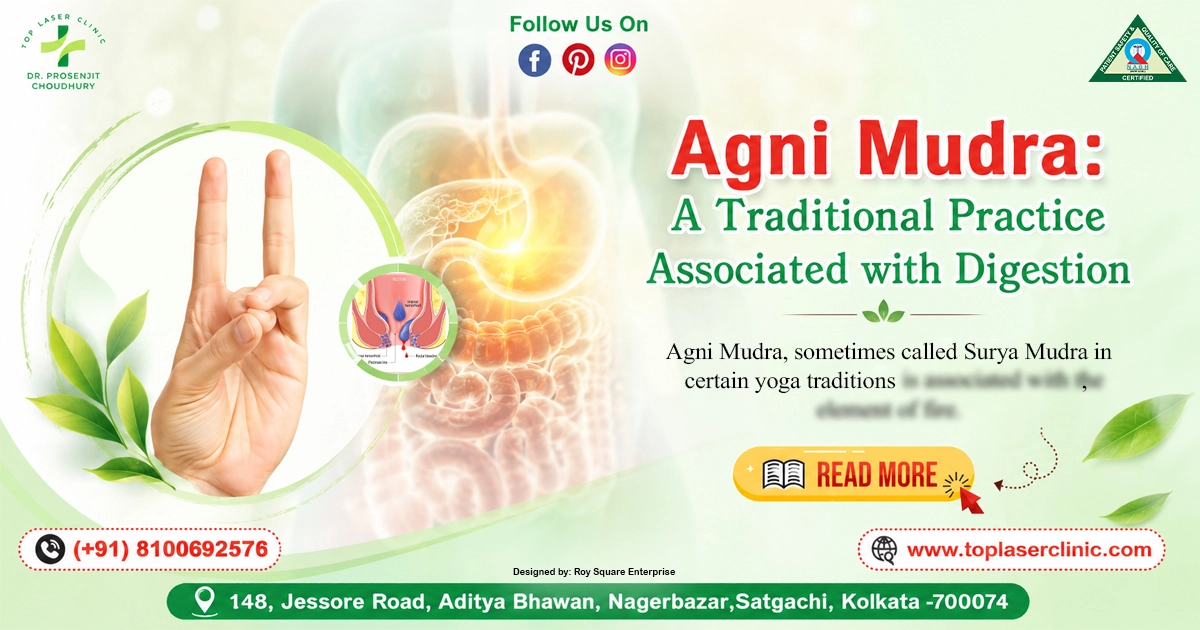
3. Agni Mudra: A Traditional Practice Associated with Digestion
Agni Mudra, sometimes called Surya Mudra in certain yoga traditions, is associated with the element of fire. Practitioners traditionally connect it with metabolism and digestive balance.
How to Practise Agni Mudra
- Sit in a comfortable position with your shoulders relaxed.
- Bend the ring finger towards the base of the thumb.
- Place the thumb gently over the bent ring finger.
- Keep the other fingers extended but relaxed.
- Rest your hands on your thighs.
- Breathe normally for a few minutes, stopping if you feel uncomfortable.
How May It Help?
Agni Mudra is traditionally believed to support digestive functions, but reliable clinical evidence does not establish that it improves digestion or relieves piles.
For better bowel health, focus on eating fibre-rich foods, drinking enough fluids and maintaining a regular toilet routine. These steps are better supported for preventing constipation and reducing straining during bowel movements.
People who are pregnant or have medical conditions should seek appropriate advice before starting unfamiliar yoga practices.
4. Varun Mudra: A Gentle Hand Gesture for Well-Being
Varun Mudra is traditionally associated with the water element and bodily fluid balance. It is often practised during meditation as part of a general wellness routine.
How to Practise Varun Mudra
- Sit comfortably and relax your hands.
- Bring the tip of your little finger into gentle contact with the tip of your thumb.
- Keep the other fingers naturally extended.
- Place your hands on your thighs.
- Breathe slowly and comfortably for five minutes, or for a shorter period if needed.
How May It Help?
Varun Mudra is traditionally associated with hydration and balance, but there is no reliable evidence that performing it changes the body’s fluid balance or treats haemorrhoids.
Adequate fluid intake is important for bowel health, particularly when increasing dietary fibre. The amount of fluid you need depends on your health, activity level and any medical restrictions. Follow your doctor’s advice if you have a condition that requires fluid limitation.
Remember that practising Varun Mudra does not replace drinking water or treating the underlying cause of piles.
5. Vayu Mudra: A Traditional Gesture Associated with Gas and Discomfort
Vayu Mudra is commonly associated with the air element in traditional yoga. Some practitioners use it as part of a routine intended to support comfort and relaxation.
How to Practise Vayu Mudra
- Sit in a relaxed position.
- Bend your index finger towards the base of your thumb.
- Place your thumb gently over the bent index finger.
- Keep the other fingers extended without applying force.
- Rest your hands on your thighs and breathe normally.
- Practise for a few minutes if comfortable.
How May It Help?
Vayu Mudra is traditionally believed to help balance the air element and is sometimes associated with gas-related discomfort. However, scientific evidence does not show that it relieves constipation, reduces haemorrhoidal swelling or cures piles.
If gas, bloating or constipation occurs frequently, consider your diet, activity level and bowel habits. Persistent symptoms should be discussed with a healthcare professional rather than managed with mudras alone.
6. Ashwini Mudra: A Pelvic Floor Practice
Ashwini Mudra differs from the other practices in this list because it involves gentle contraction and relaxation of the muscles around the anal opening. It is described in traditional yoga and is sometimes compared with pelvic floor muscle exercises.
How to Practise Ashwini Mudra
- Sit or lie down in a comfortable position.
- Relax your abdomen, buttocks and thighs.
- Gently contract the muscles around the anal opening, as though preventing the passage of gas.
- Hold the contraction briefly, only if comfortable.
- Release completely and allow the muscles to relax.
- Repeat a few times without straining or holding your breath.
How May It Help?
Ashwini Mudra is traditionally practised for awareness and control of the pelvic floor muscles. However, it has not been established as a treatment for haemorrhoids.
Do not perform forceful contractions, bear down or continue if the exercise causes pain or increases pressure around the anus. People with painful piles, an anal fissure, pelvic floor problems or recent anorectal surgery should ask their clinician whether this exercise is suitable.
Important: Relaxation and avoiding straining are especially important during bowel movements. Ashwini Mudra should not be confused with pushing or repeatedly squeezing the anal muscles to try to remove piles.
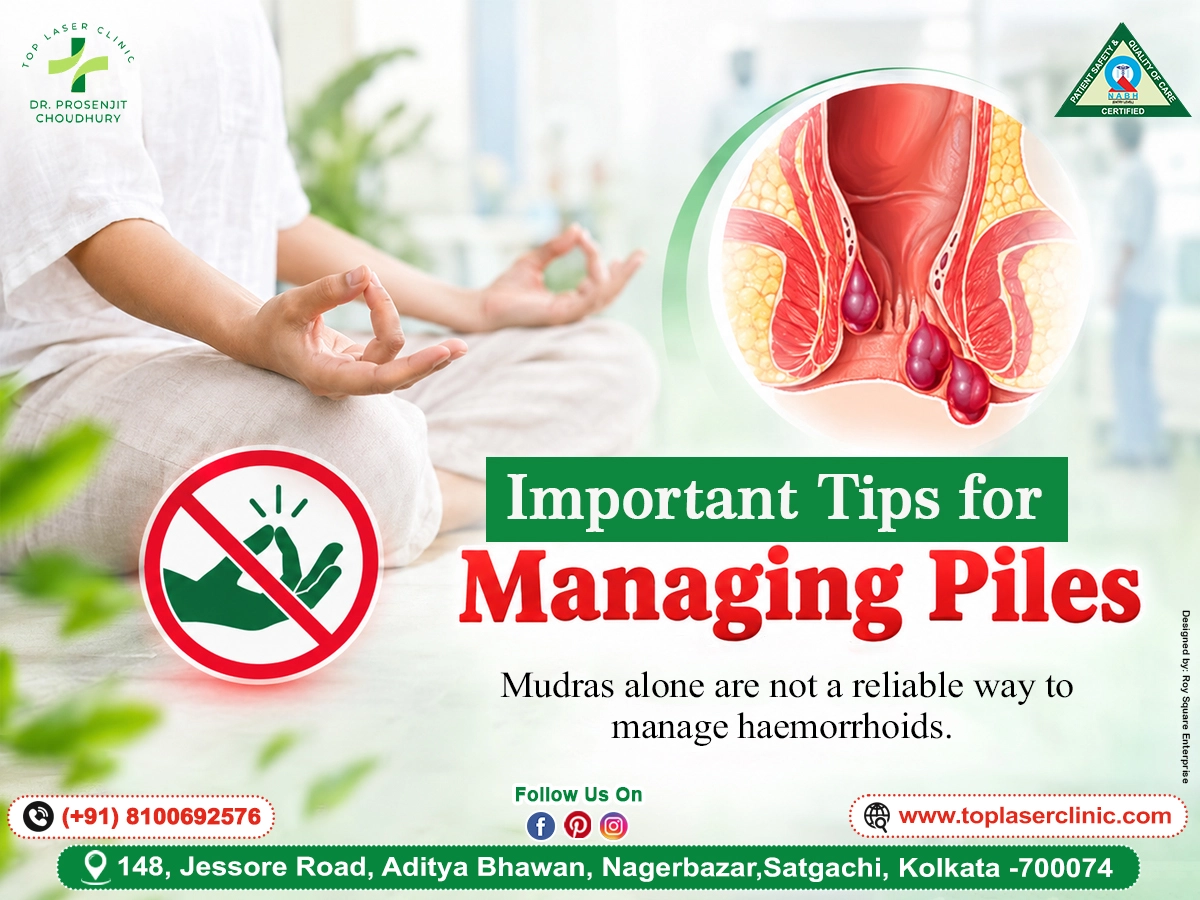
7. Important Tips for Managing Piles
Mudras alone are not a reliable way to manage haemorrhoids. The following measures have stronger medical support for relieving symptoms and reducing constipation-related straining.
Eat More Fibre
Include vegetables, fruits, whole grains, beans and other fibre-rich foods in your meals. Increase fibre gradually to reduce gas and bloating.
Drink Enough Water
Adequate fluids help fibre work effectively and may make stools easier to pass. Follow individual medical advice if you have fluid restrictions.
Avoid Straining
Do not force bowel movements or sit on the toilet for long periods. Respond to the urge to pass stools instead of repeatedly delaying it.
Stay Physically Active
Regular walking and other suitable physical activities can support bowel regularity and general health.
Consider Medical Treatment
A doctor may recommend fibre supplements, stool-softening measures, medicines for symptom relief or an office-based procedure, depending on the severity of the condition. Some patients require surgery.
Do not assume that rectal bleeding is caused by piles without an assessment, especially if it is new, recurrent or unexplained.
8. When to See a Doctor
Although mild piles can sometimes improve with home care, persistent or severe symptoms require medical attention.
Consult a healthcare professional if you experience:
- Repeated bleeding during bowel movements.
- Persistent anal pain, itching or swelling.
- A lump around the anus that is painful or does not improve.
- Constipation that continues despite dietary changes.
- Symptoms that return frequently or interfere with daily life.
- Changes in bowel habits or unexplained weight loss.
Seek urgent medical care for heavy or continuous rectal bleeding, dizziness or fainting associated with bleeding, black or tarry stools, or severe anal pain accompanied by fever or significant swelling.
A doctor can assess your symptoms, confirm whether piles are the cause and recommend an appropriate treatment plan.
9. Why Choose Dr. Prosenjit Choudhury at Top Laser Clinic?
Choosing the right medical professional is an important step when dealing with piles, recurring rectal bleeding or persistent anal discomfort. A proper assessment helps identify the cause of the symptoms and determine whether lifestyle changes, medication, a minimally invasive procedure or surgery may be appropriate.
At Top Laser Clinic, Kolkata, patients seeking guidance for general surgical conditions can consult Dr. Prosenjit Choudhury, Consultant General & Laparoscopic Surgeon.
When considering care for piles, a consultation can help you understand:
- Whether your symptoms are consistent with haemorrhoids or another condition.
- Which lifestyle changes may help reduce constipation and straining.
- Whether non-surgical or procedural treatment may be suitable.
- The potential benefits, risks and recovery requirements of available treatments.
- When further investigation is necessary for rectal bleeding.
Patients searching for an experienced General & Laparoscopic Surgeon in Kolkata or the best general surgeon in Kolkata should consider the surgeon’s qualifications, relevant experience, treatment options and suitability for their individual condition.
Dr. Prosenjit Choudhury at Top Laser Clinic can assess your concerns and guide you towards appropriate next steps based on clinical findings.
10. Conclusion
Gyan Mudra, Agni Mudra, Varun Mudra, Vayu Mudra and Ashwini Mudra are traditional practices that some people include in their yoga and relaxation routines. However, there is not enough scientific evidence to confirm that these mudras directly treat piles, reduce swollen veins or stop rectal bleeding.
For better symptom management, focus on a fibre-rich diet, adequate hydration, regular physical activity and avoiding straining during bowel movements. If symptoms persist, worsen or include bleeding, seek medical advice rather than relying on home practices alone.
With a proper assessment and suitable treatment, piles can often be managed effectively. Consult a qualified healthcare professional to understand which options are appropriate for your needs.
Which mudra is best for piles?
No mudra has been scientifically proven to treat piles, although some people use them for relaxation.
2. Can mudras cure piles permanently?
No, there is no reliable evidence that mudras permanently cure haemorrhoids.
3. Does Gyan Mudra help with piles?
Gyan Mudra may be used for meditation, but it has not been shown to relieve piles directly.
4. Can Agni Mudra improve digestion?
Agni Mudra is traditionally associated with digestion, but strong clinical evidence supporting this effect is lacking.
5. Is Varun Mudra useful for constipation?
Varun Mudra is not a proven treatment for constipation; fibre, adequate fluids and appropriate medical advice are more reliable approaches.
6. Can Vayu Mudra reduce gas and bloating?
There is insufficient scientific evidence that Vayu Mudra reduces gas, bloating or piles symptoms.
7. Is Ashwini Mudra safe for people with piles?
It may not suit everyone, especially those with painful symptoms or recent surgery, so ask a clinician before practising it.
8. What is the fastest way to relieve piles discomfort?
Treatment depends on the cause and severity; avoiding straining, increasing fibre and following appropriate medical advice can help.
9. Can piles heal without surgery?
Many mild cases improve with conservative care, while persistent or advanced cases may require a procedure or surgery.
10. When should I consult a surgeon for piles?
Consult a surgeon for recurrent bleeding, persistent pain, worsening swelling or symptoms that do not improve with home care.

