Table of Contents
What Is Laparoscopic Surgery?
Laparoscopic surgery is a minimally invasive surgical technique performed through small cuts rather than one large incision. It is sometimes called keyhole surgery.
A thin instrument called a laparoscope, which has a camera and light, is inserted through one of these openings. The camera sends magnified images to a monitor, allowing the surgeon to see and operate inside the body.
Special surgical instruments are inserted through the other small openings to perform the required procedure.
Laparoscopic surgery is commonly used for procedures such as:
- Gallbladder surgery
- Hernia repair
- Appendix surgery
- Some colorectal procedures
- Certain gynecological surgeries
- Some abdominal procedures
Not every patient or condition is suitable for laparoscopy. The appropriate surgical approach depends on the patient’s condition, previous surgeries, overall health and the complexity of the procedure.
What Is Open Surgery?
Open surgery is a traditional surgical approach in which the surgeon makes a larger incision to directly access the affected area.
The size and location of the incision depend on the type of operation being performed. Open surgery may be necessary when the surgeon needs wider access or when a minimally invasive approach would not provide adequate visibility or control.
Open surgery continues to have an important role in modern healthcare and can be the safest option for certain complex cases.
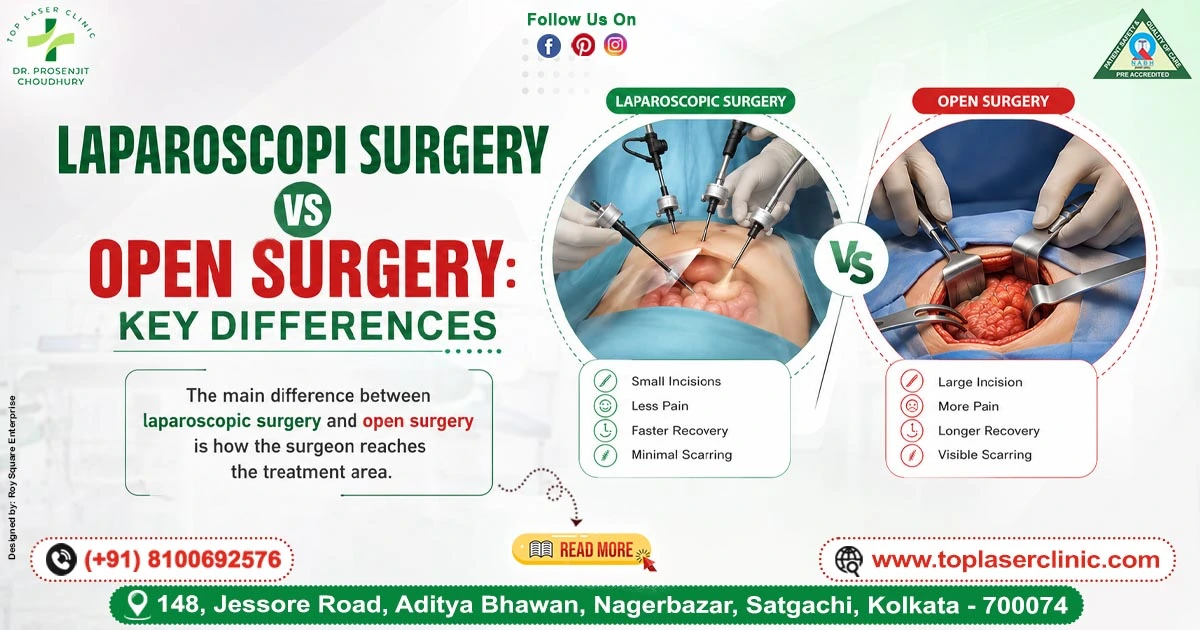
Laparoscopic Surgery vs Open Surgery: Key Differences
The main difference between laparoscopic surgery and open surgery is how the surgeon reaches the treatment area.
| Feature | Laparoscopic Surgery | Open Surgery |
| Incision | Usually several small incisions | Usually one larger incision |
| Surgical access | Camera and specialised instruments | Direct access through the incision |
| Scarring | Generally smaller scars | Generally more noticeable scar |
| Post-operative discomfort | Often less, depending on the procedure | May be greater, depending on the operation |
| Hospital stay | Often shorter for suitable procedures | May be longer |
| Recovery | Often quicker | Often takes longer |
| Suitability | Depends on the condition and patient | Suitable for many routine and complex operations |
| Surgical technique | Minimally invasive | Traditional surgical approach |
These are general differences. The actual experience can vary significantly depending on the type of surgery and individual patient.
How Is Laparoscopic Surgery Performed?
Before surgery, the patient undergoes an appropriate medical evaluation. The surgeon may recommend blood tests, imaging or other investigations depending on the procedure.
During laparoscopic surgery:
- The patient is given anaesthesia.
- Small incisions are made.
- A laparoscope is inserted through one opening.
- The abdomen may be gently inflated with carbon dioxide to create working space.
- Special surgical instruments are introduced through additional small openings.
- The surgeon performs the required procedure while viewing the internal area on a monitor.
- The instruments are removed after the operation.
- The small incisions are closed.
The exact steps vary according to the surgery being performed.
How Is Open Surgery Performed?
Open surgery is also performed under appropriate anaesthesia.
The surgeon makes an incision large enough to reach the affected organ or area. After gaining access, the surgeon performs the necessary treatment directly. Once the procedure is completed, the incision is carefully closed using sutures, staples or other appropriate methods.
Although the incision is generally larger than in laparoscopic surgery, open surgery can provide the access required for certain complicated procedures.
Pain and Scarring: Laparoscopic vs Open Surgery
Pain after surgery can vary from one person to another.
In many suitable laparoscopic procedures, smaller incisions may result in less wound-related discomfort and smaller scars. However, patients can sometimes experience temporary abdominal or shoulder discomfort because of the gas used during the procedure.
Open surgery involves a larger incision, which may lead to more wound-related discomfort during the early recovery period.
Scarring also depends on the individual’s healing process, surgical technique, incision size and aftercare.
It is important not to choose a surgical method based only on scar size. Safety and successful treatment should always be the primary goals.
Risks and Possible Complications
Both laparoscopic and open surgery can have risks. The risks depend on the specific procedure, the patient’s health and other factors.
Possible complications can include:
- Bleeding
- Infection
- Blood clots
- Reaction to anaesthesia
- Injury to nearby organs
- Wound-related problems
- Temporary digestive or abdominal discomfort
- Need for additional treatment or surgery in some cases
Laparoscopic surgery may occasionally need to be converted to open surgery if the surgeon feels that continuing laparoscopically is not safe or appropriate.
Your surgeon should explain the expected benefits, risks and alternatives before surgery.
Which Surgery Has a Faster Recovery?
For many suitable procedures, laparoscopic surgery may allow a faster recovery than comparable open surgery because the incisions are smaller and there is generally less disruption to surrounding tissues.
Patients may return to normal activities sooner in some cases. However, recovery isn’t the same for everyone.
Recovery depends on:
- Type of surgery
- Patient’s age and general health
- Existing medical conditions
- Surgical complexity
- Post-operative care
- Individual healing
Always follow your surgeon’s instructions regarding exercise, lifting, diet, work and other activities.
Cost of Laparoscopic vs Open Surgery
The cost of surgery can vary considerably.
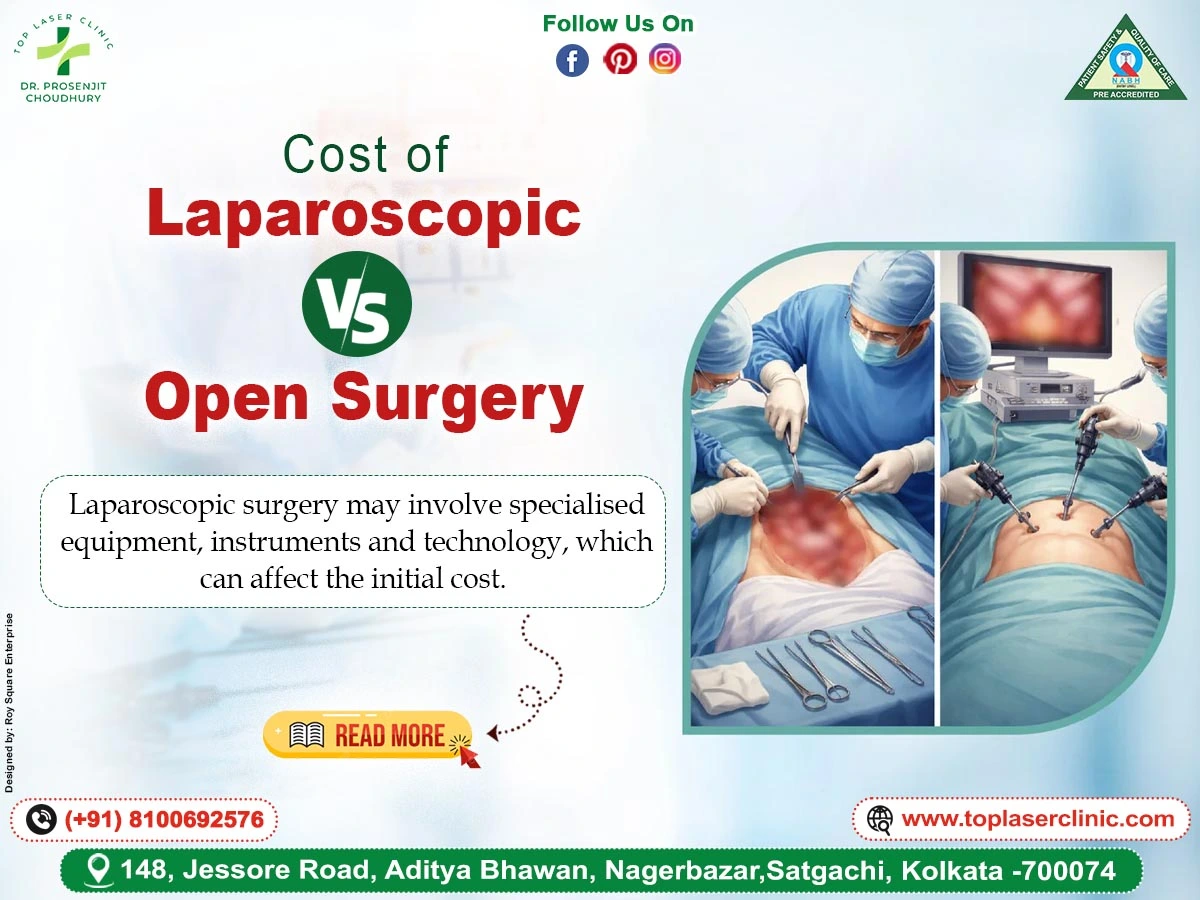
Laparoscopic surgery may involve specialised equipment, instruments and technology, which can affect the initial cost. On the other hand, shorter hospital stays and faster recovery in suitable cases may influence the overall healthcare expenses.
Open surgery can sometimes have lower procedure-related equipment costs, but hospital stay and recovery requirements may vary.
The final cost depends on factors such as:
- Type of operation
- Surgeon and hospital
- Anaesthesia
- Diagnostic tests
- Room category
- Medicines
- Duration of hospitalisation
- Any additional treatment required
Therefore, patients should discuss the complete estimated cost with their healthcare provider rather than comparing only the procedure fee.
When to See a Doctor
If you have persistent abdominal pain, a swelling or lump, repeated digestive problems, unexplained symptoms or a condition that may require surgery, consult a qualified surgeon.
After an operation, seek medical attention if you develop symptoms such as:
- High or persistent fever
- Increasing pain
- Excessive bleeding
- Redness or discharge from the wound
- Persistent vomiting
- Difficulty breathing
- Severe abdominal swelling
Prompt medical assessment can help identify complications early.
Why Choose Dr. Prosenjit Choudhury?
Choosing the right surgeon is an important part of surgical care. Dr. Prosenjit Choudhury, an experienced General & Laparoscopic Surgeon in Kolkata, provides surgical consultation and treatment based on the patient’s individual condition.
At Top Laser Clinic, patients can receive guidance regarding appropriate surgical options, including minimally invasive approaches when clinically suitable.
Dr. Prosenjit Choudhury focuses on understanding the patient’s condition, explaining the available treatment options and helping patients make informed decisions about their surgical care.
If you are considering laparoscopic surgery, speak with Dr. Prosenjit Choudhury at Top Laser Clinic to understand whether a minimally invasive approach is appropriate for your condition.
Conclusion
The choice between laparoscopic surgery vs open surgery is not simply about choosing the newer or smaller procedure. The right surgical approach depends on the patient’s diagnosis, overall health, surgical complexity and the surgeon’s clinical judgment.
Laparoscopic surgery can offer benefits such as smaller incisions, reduced wound-related discomfort and potentially faster recovery for many suitable procedures. However, open surgery remains an essential option and may be the preferred approach in certain situations.
The most important step is to receive an accurate diagnosis and discuss all suitable treatment options with an experienced surgeon. A personalised evaluation can help determine the safest and most appropriate approach for you.
1. Which is better, laparoscopic surgery or open surgery?
There is no single answer. The best approach depends on the patient’s condition, the procedure required and the surgeon’s assessment.
2. Is laparoscopic surgery safer than open surgery?
Laparoscopic surgery is safe and effective for many suitable procedures. However, safety depends on the patient’s condition, the type of surgery and the surgeon’s expertise.
3. Does laparoscopic surgery hurt less?
Many patients experience less wound-related pain because the incisions are smaller, although some temporary discomfort can still occur.
4. Does laparoscopic surgery leave scars?
Yes. Small scars remain at the incision sites, but they are generally smaller than the scar from comparable open surgery.
5. How long does laparoscopic surgery take?
The duration depends entirely on the procedure and its complexity.
6. How long does recovery take after laparoscopic surgery?
Recovery varies by procedure and patient. Many patients resume normal activities sooner than after comparable open surgery, but individual recovery times differ.
7. Can laparoscopic surgery be converted to open surgery?
Yes. If the surgeon determines that open access is safer or necessary, laparoscopic surgery may be converted to an open procedure.
8. Is open surgery still commonly performed?
Yes. Open surgery remains an important treatment option, particularly for certain complex or extensive operations.
9. Can everyone undergo laparoscopic surgery?
No. Laparoscopy is not appropriate for every patient or every condition. A surgeon must assess whether it is suitable.
10. How do I know which surgery is right for me?
Discuss your diagnosis, treatment options, expected recovery, risks and alternatives with an experienced surgeon before making a decision.

