Table of Contents
1. What Is Chronic Pancreatitis?
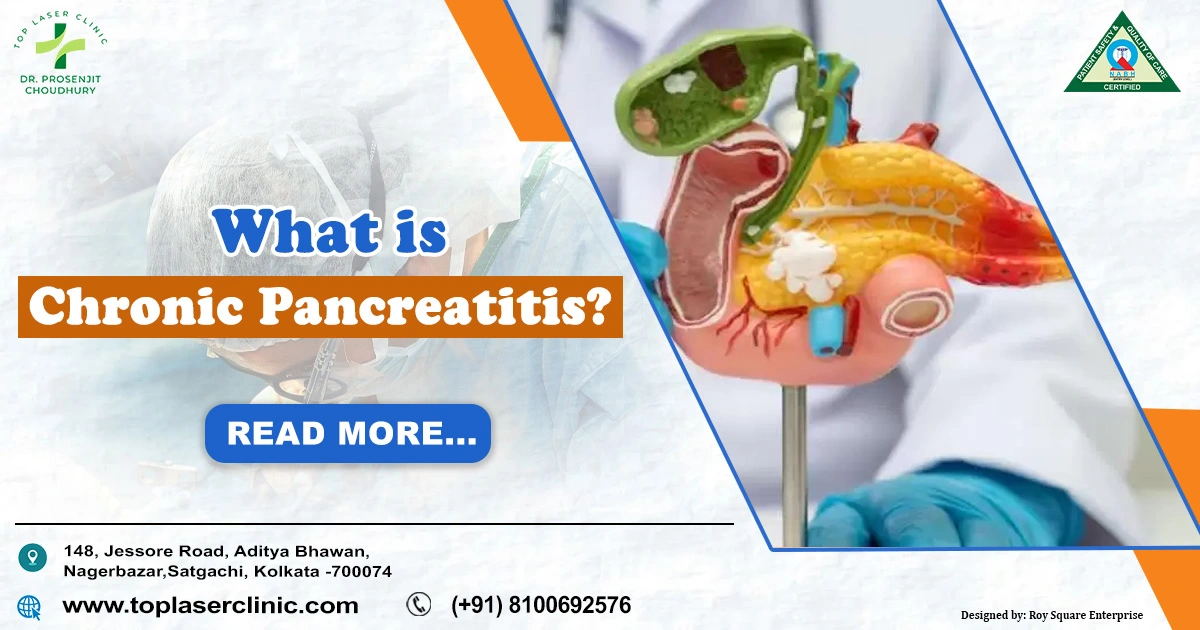
Chronic pancreatitis is a long-term inflammatory condition of the pancreas in which the organ gradually loses its ability to function properly. Unlike acute pancreatitis, which occurs suddenly and may resolve with treatment, chronic pancreatitis develops slowly and causes permanent damage to pancreatic tissue.
When chronic inflammation persists, it affects the production of digestive enzymes and insulin, leading to pain, poor digestion, weight loss, and sometimes diabetes. Early diagnosis and proper treatment are essential to manage symptoms, prevent complications, and improve quality of life.
2. Symptoms of Chronic Pancreatitis
Common signs include:
- Persistent upper abdominal pain
- Pain that radiates to the back
- Pain after eating fatty meals
- Nausea and vomiting
- Loss of appetite
- Unintentional weight loss
- Oily, foul-smelling stools (steatorrhea)
- Bloating and indigestion
- Fatigue and weakness
- Development of diabetes in advanced stages
Pain may be constant or episodic and can significantly affect daily activities if left untreated.
3. Causes of Chronic Pancreatitis
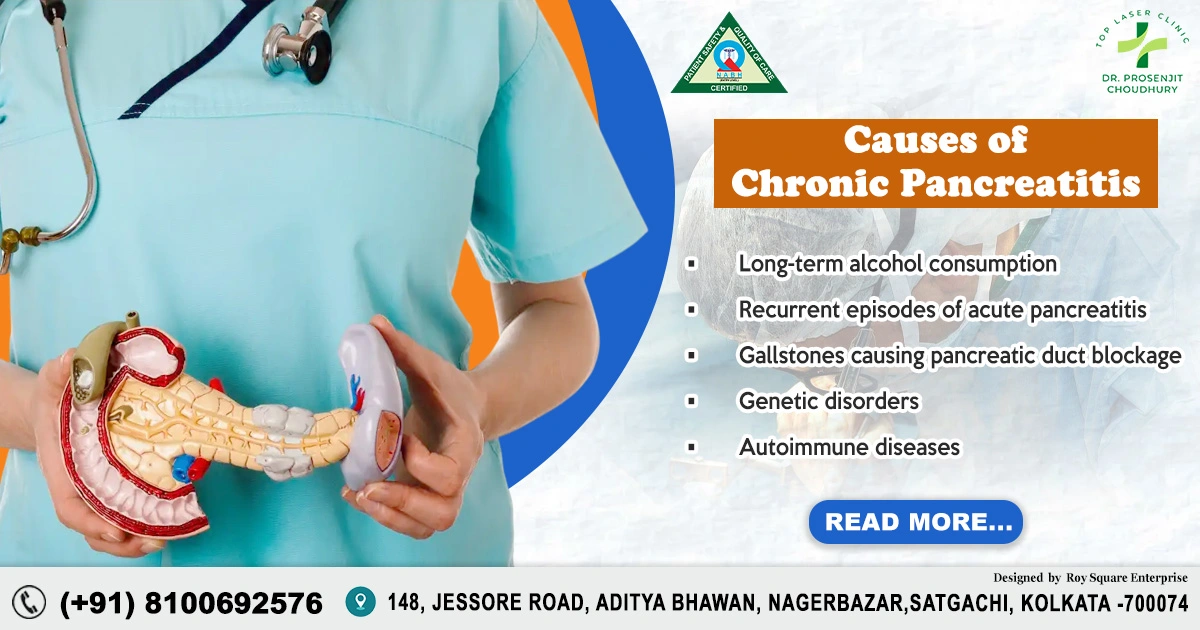
Several factors can lead to long-term inflammation of the pancreas:
- Long-term alcohol consumption
- Recurrent episodes of acute pancreatitis
- Gallstones causing pancreatic duct blockage
- Genetic disorders
- Autoimmune diseases
- High triglyceride levels
- Smoking
- Structural abnormalities of the pancreas
Identifying the underlying cause helps in choosing the most effective treatment approach.
4. Risk Factors
You may be at higher risk of developing chronic pancreatitis if you have:
- History of heavy alcohol use
- Smoking habits
- Family history of pancreatic disease
- High cholesterol or triglyceride levels
- Autoimmune conditions
- Previous pancreatic injury
- Long-standing gallbladder disease
Reducing modifiable risk factors plays a key role in slowing disease progression.
5. Diagnosis
Accurate diagnosis is crucial for effective management. Doctors may recommend:
- Detailed medical history and physical examination
- Blood tests to check pancreatic enzyme levels
- Stool tests to assess fat absorption
- Ultrasound or CT scan of the abdomen
- MRI or MRCP to evaluate pancreatic ducts
- Endoscopic ultrasound in selected cases
These tests help determine the extent of pancreatic damage and guide treatment planning.
6. Treatment Options for Chronic Pancreatitis
Treatment focuses on relieving pain, improving digestion, and preventing complications.
A. Lifestyle and Dietary Management
- Complete avoidance of alcohol
- Smoking cessation
- Low-fat, high-protein diet
- Small, frequent meals
- Adequate hydration
B. Medications
- Pain-relieving medicines
- Pancreatic enzyme supplements
- Insulin or oral medications for diabetes
- Vitamins to correct nutritional deficiencies
C. Endoscopic Treatment
- Removal of pancreatic duct stones
- Stenting of blocked ducts
- Drainage of fluid collections
D. Surgical Treatment
Surgery may be advised when pain is severe, complications arise, or other treatments fail.
Surgical goals include:
- Relieving duct obstruction
- Removing diseased pancreatic tissue
- Improving long-term pain control
Advanced minimally invasive and laparoscopic techniques have improved surgical outcomes and recovery.
At Top Laser Clinic, chronic pancreatitis cases are managed with a patient-focused approach under the expertise of Dr. Prosenjit Choudhury, ensuring safe decision-making and individualized care.
7. Recovery After Surgery
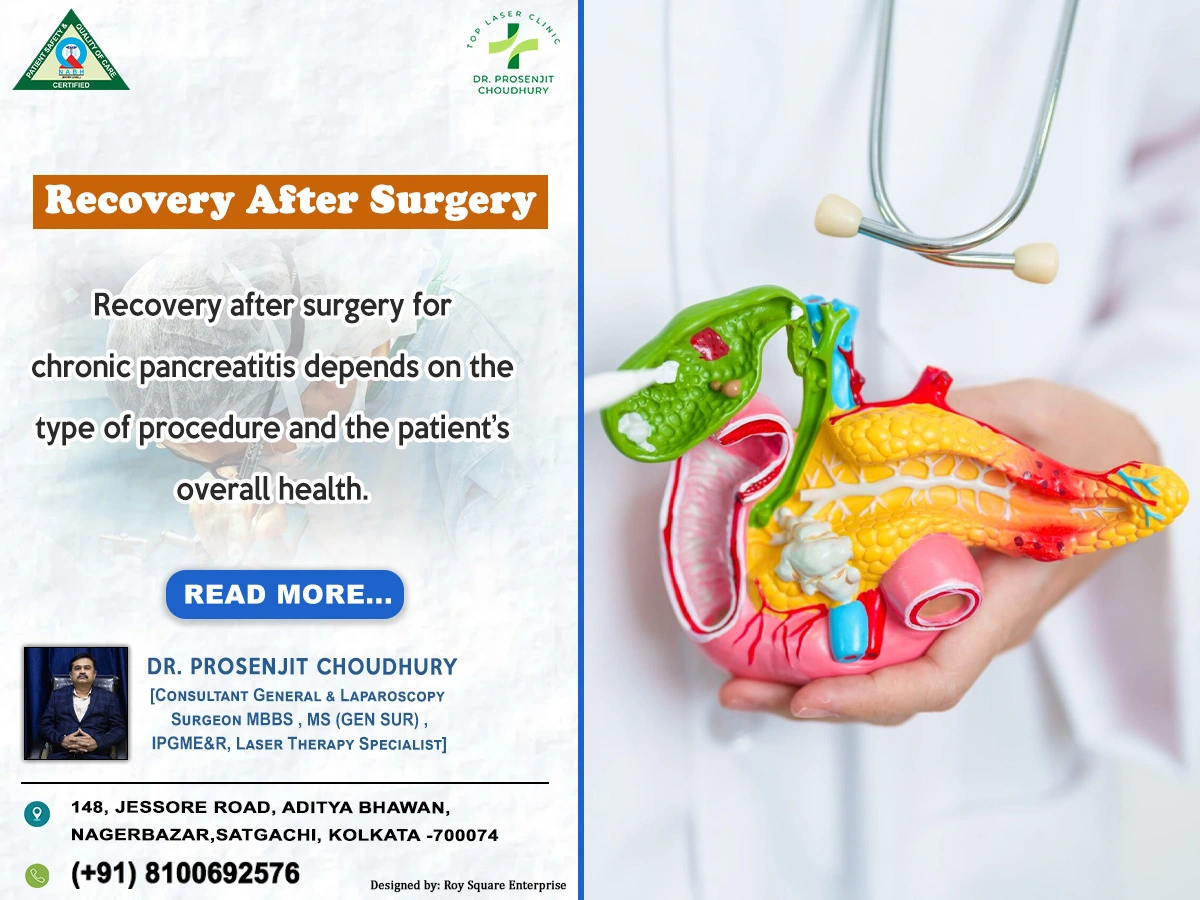
Recovery after surgery for chronic pancreatitis depends on the type of procedure and the patient’s overall health.
What to Expect
- Hospital stay for monitoring
- Gradual pain reduction
- Return to light activities within a few weeks
- Improvement in digestion with enzyme support
Post-Surgery Care Tips
- Follow dietary guidelines strictly
- Take prescribed medications regularly
- Avoid alcohol and smoking completely
- Attend follow-up appointments
- Maintain a healthy lifestyle
Many patients experience significant relief from chronic pain and a better quality of life after proper surgical
treatment.
8. Possible Complications
If not managed well, chronic pancreatitis may lead to:
- Persistent severe pain
- Malnutrition
- Diabetes mellitus
- Pancreatic pseudocysts
- Bile duct or intestinal obstruction
- Increased risk of pancreatic cancer
Timely treatment and regular monitoring reduce the risk of these complications.
09. Why Choose Dr. Prosenjit Choudhury, Top Laser Clinic
Managing chronic pancreatitis requires experience, precision, and long-term planning.
Dr. Prosenjit Choudhury at Top Laser Clinic is highly trusted for complex abdominal and pancreatic conditions because:
- He is an experienced General & Laparoscopic Surgeon in Kolkata
- Skilled in advanced minimally invasive surgical techniques
- Takes a patient-centered, step-by-step treatment approach
- Focuses on pain relief, safety, and long-term wellness
- Recognized by many patients as one of the best general surgeons in Kolkata
Under the care of Dr. Prosenjit Choudhury, patients receive clear guidance, ethical treatment choices, and comprehensive follow-up care.
10. Conclusion
Chronic pancreatitis is a challenging condition, but with the right diagnosis, treatment plan, and lifestyle changes, patients can regain control over their health and daily life. Early intervention helps slow disease progression, reduce pain, and prevent serious complications.
Modern medical and surgical options have made chronic pancreatitis treatment more effective than ever before. With expert care, proper nutrition, and consistent follow-up, long-term relief is achievable.
If you or a loved one is struggling with chronic pancreatitis, consulting Dr. Prosenjit Choudhury at Top Laser Clinic offers access to experienced hands, advanced treatment options, and compassionate care focused on lasting comfort and improved quality of life.
1. Is chronic pancreatitis curable?
It cannot be completely cured, but symptoms can be effectively controlled.
2. Does chronic pancreatitis always require surgery?
No, surgery is needed only in selected cases.
3. Can diet help manage symptoms?
Yes, diet plays a major role in symptom control.
4. Is pain permanent in chronic pancreatitis?
Pain can be significantly reduced with proper treatment.
5. Can chronic pancreatitis cause diabetes?
Yes, long-term damage can affect insulin production.
6. Is alcohol the main cause?
It is a common cause but not the only one.
7. How long does recovery take after surgery?
Most patients recover within a few weeks to months.
8. Are enzyme supplements lifelong?
In many cases, yes.
9. Is chronic pancreatitis life-threatening?
With proper care, most patients live a normal life.
10. Who should manage chronic pancreatitis treatment?
An experienced surgeon and multidisciplinary team ensure best outcomes.

