The thyroid gland may be small, but its role in keeping the body healthy is enormous. From regulating metabolism to maintaining energy levels, this gland silently manages many vital functions every day. When thyroid function becomes imbalanced, it can affect almost every system in the body.
This detailed guide explains thyroid gland function in a clear, practical, and reader-friendly way so that anyone can understand how it works and why it matters.
Table of Contents
What Is the Thyroid Gland?
The thyroid gland is a small, butterfly-shaped. It is part of the endocrine system, which produces hormones that regulate different functions of the body.
Although small in size, the thyroid gland influences:
- Metabolism
- Energy levels
- Heart rate
- Body temperature
- Growth and development
The thyroid produces two major hormones:
- T3 (Triiodothyronine)
- T4 (Thyroxine)
These hormones travel through the bloodstream and affect almost every organ in the body.
Main Function of the Thyroid Gland
The primary function of the thyroid gland is to control the body’s metabolism, which is the process by which the body converts food into energy.
Key functions include:
- Regulating energy production
- Maintaining body temperature
- Supporting brain function
- Controlling heart rate
- Supporting digestion
- Maintaining healthy skin, hair, and muscles
When thyroid hormones are balanced, the body functions smoothly. But when levels are too high or too low, several health issues may develop.
How the Thyroid Gland Works
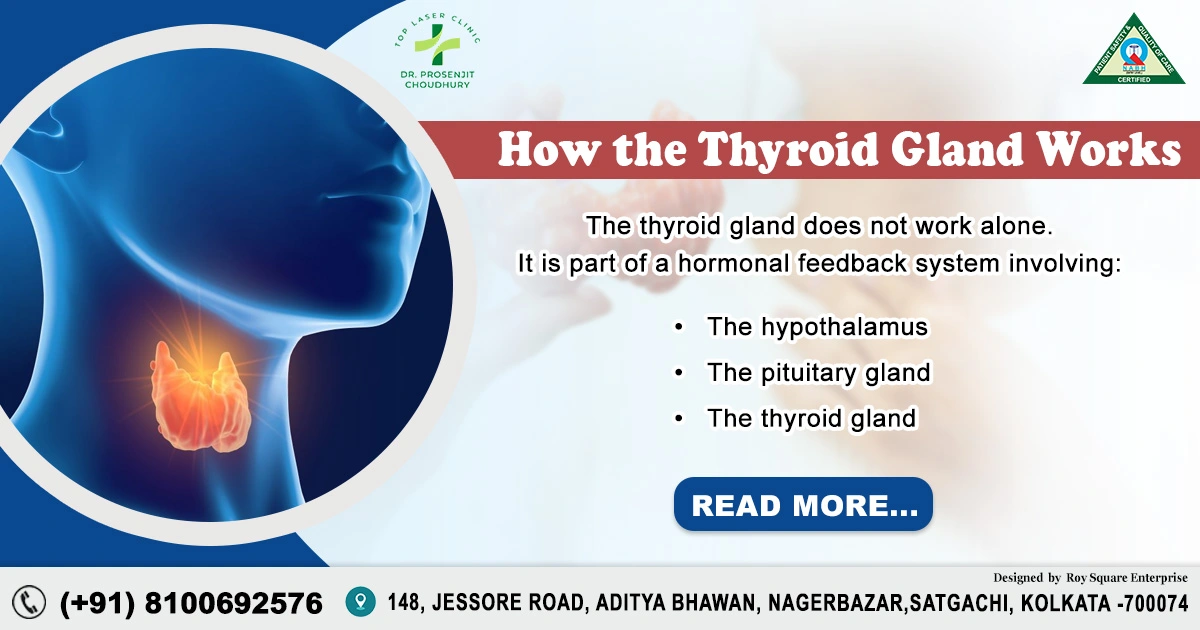
The thyroid gland does not work alone. It is part of a hormonal feedback system involving:
- The hypothalamus
- The pituitary gland
- The thyroid gland
Here’s how it works in simple terms:
- The hypothalamus signals the pituitary gland.
- The pituitary releases TSH (Thyroid Stimulating Hormone).
- TSH stimulates the thyroid gland to produce T3 and T4.
- Hormone levels are adjusted automatically to maintain balance.
This system ensures that the body always has the right amount of thyroid hormone.
Why Thyroid Function Is Important
Healthy thyroid function is essential for overall well-being. It affects many body systems at the same time.
Important roles of thyroid function:
- Maintaining energy and stamina
- Supporting mental clarity and mood
- Helping control body weight
- Supporting heart and muscle function
- Maintaining reproductive health
Even a mild imbalance in thyroid hormones can cause noticeable symptoms.
Common Disorders Related to Thyroid Function
Several thyroid disorders can occur when hormone production is disturbed.
1. Hypothyroidism
This occurs when the thyroid gland produces too little hormone.
2. Hyperthyroidism
This happens when the thyroid produces too much hormone.
Symptoms may include weight loss, anxiety, sweating, and rapid heartbeat.
3. Goiter
An enlargement of the thyroid gland that may cause visible swelling in the neck.
4. Thyroid Nodules
Small lumps that form in the thyroid gland. Most are non-cancerous but require evaluation.
5. Thyroiditis
Inflammation of the thyroid gland, often caused by autoimmune conditions or infections.
Signs That Thyroid Function May Be Imbalanced
Recognizing symptoms early is important.
Common warning signs include:
- Constant fatigue
- Unexplained weight gain or weight loss
- Hair fall or thinning hair
- Dry skin
- Mood changes or depression
- Sensitivity to cold or heat
- Irregular heartbeat
- Swelling in the neck
If these symptoms persist, medical evaluation is recommended.
Factors That Affect Thyroid Function
Several factors can influence thyroid health.
Important risk factors include:
- Iodine deficiency
- Family history of thyroid disease
- Autoimmune disorders
- Stress
- Hormonal changes
- Pregnancy
- Certain medications
Lifestyle and diet also play a major role in maintaining thyroid balance.
How Thyroid Function Is Diagnosed
Doctors use several methods to diagnose thyroid problems.
Common diagnostic tests:
- Blood tests (TSH, T3, T4 levels)
- Ultrasound of the thyroid
- Physical examination
- Fine needle biopsy (if nodules are present)
How to Maintain Healthy Thyroid Function
Healthy habits can support thyroid function.
Practical tips:
- Eat a balanced diet rich in iodine and nutrients
- Exercise regularly
- Manage stress
- Sleep well
- Avoid excessive processed foods
- Get regular health checkups
Simple lifestyle changes can significantly improve hormonal balance.
When to See a Doctor
You should consult a doctor if you experience:
- Persistent fatigue
- Sudden weight changes
- Neck swelling
- Irregular heartbeat
- Mood disturbances
Timely consultation helps prevent complications and improves recovery.
For proper evaluation and surgical care when required, consulting an experienced specialist is important. Dr. Prosenjit Choudhury, at Top Laser Clinic, an experienced General & Laparoscopic Surgeon in Kolkata, Best general surgeon in kolkata, provides advanced treatment options and patient-focused care.
Why Choose Dr. Prosenjit Choudhury, Top Laser Clinic
Choosing the right doctor plays a crucial role in successful treatment.
Reasons patients trust the clinic:
- Advanced diagnostic and treatment methods
- Modern surgical techniques
- Patient-centered approach
- Experienced surgical expertise
Dr. Prosenjit Choudhury, at Top Laser Clinic, an experienced General & Laparoscopic Surgeon in Kolkata, Best general surgeon in kolkata, is known for providing careful evaluation and effective treatment tailored to each patient.
Patients benefit from:
- Personalized treatment plans
- Safe and modern procedures
- Professional and compassionate care
For individuals requiring surgical consultation or expert evaluation, Dr. Prosenjit Choudhury, at Top Laser Clinic, an experienced General & Laparoscopic Surgeon in Kolkata, Best general surgeon in kolkata, offers reliable and advanced medical care.
Conclusion
The thyroid gland plays a vital role in maintaining overall health. From metabolism to energy levels, its impact on the body is significant. Recognizing symptoms early, maintaining a healthy lifestyle, and seeking medical advice when needed can prevent many complications.
Understanding thyroid function empowers individuals to take better care of their health. With timely diagnosis and proper treatment, most thyroid conditions can be managed effectively, allowing people to lead healthy and active lives.
1. What is the main function of the thyroid gland?
It regulates metabolism and energy production.
2. Can thyroid problems be cured?
Many thyroid conditions can be effectively managed with treatment.
3. Is thyroid disease common?
Yes, thyroid disorders are quite common, especially among adults.
4. What are early symptoms of thyroid problems?
Fatigue, weight changes, and hair fall are common early signs.
5. Can stress affect thyroid function?
Yes, long-term stress may influence hormonal balance.
6. Is thyroid disease hereditary?
Family history can increase the risk.
7. How often should thyroid tests be done?
As advised by a doctor, usually once a year if at risk.
8. Can diet improve thyroid health?
Yes, proper nutrition supports hormone production.
9. Are thyroid disorders serious?
If untreated, they can cause complications, but early treatment helps control them.
10. When should I consult a doctor?
If symptoms persist for more than a few weeks.

